
Last updated November 25, 2026
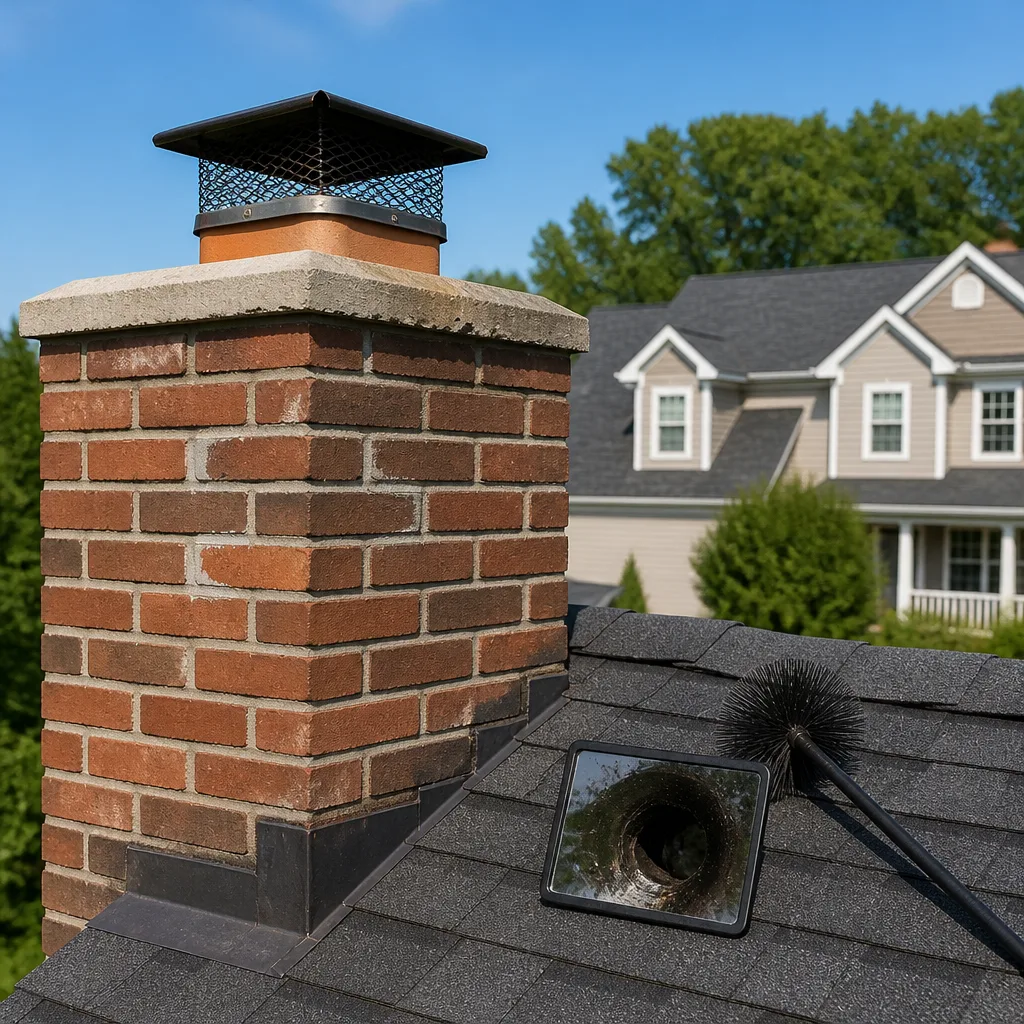 Sweep & inspection
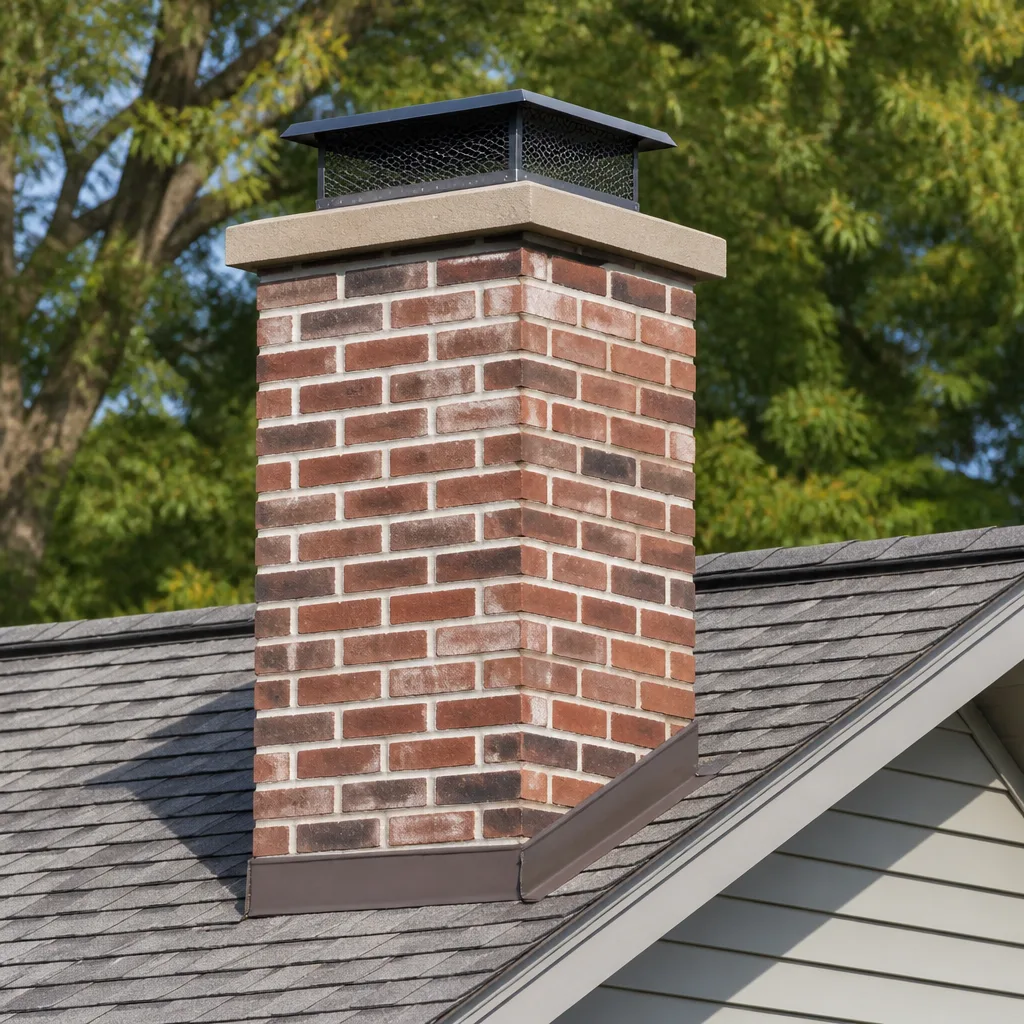 Caps & crowns
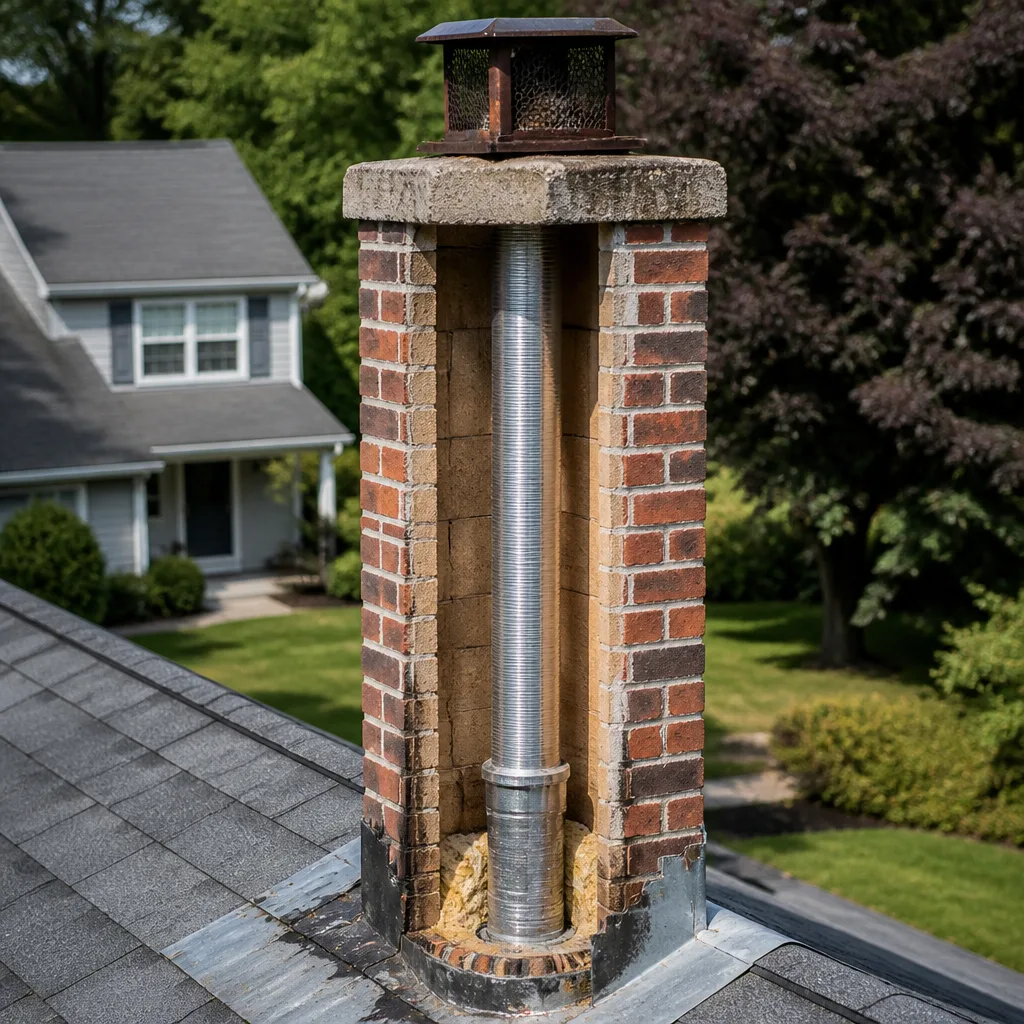 Flue relining
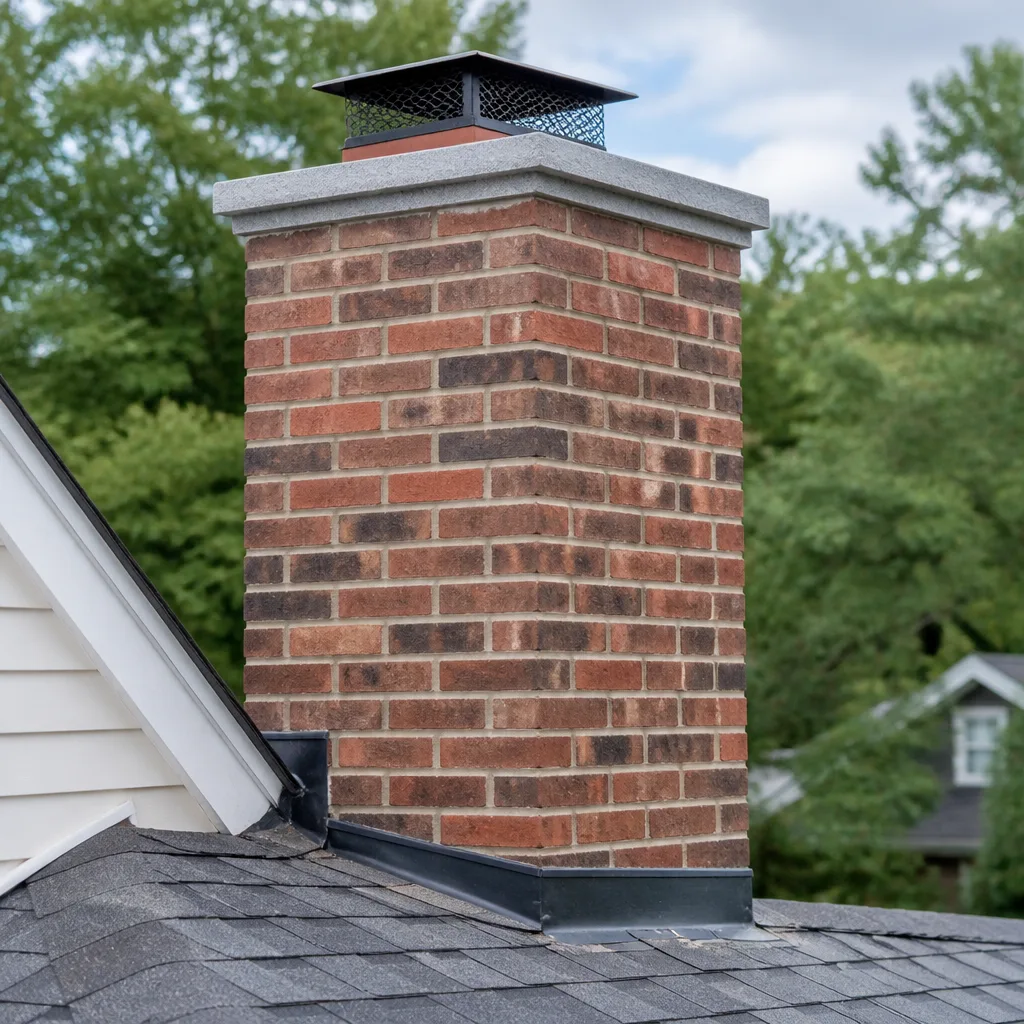 Masonry repair
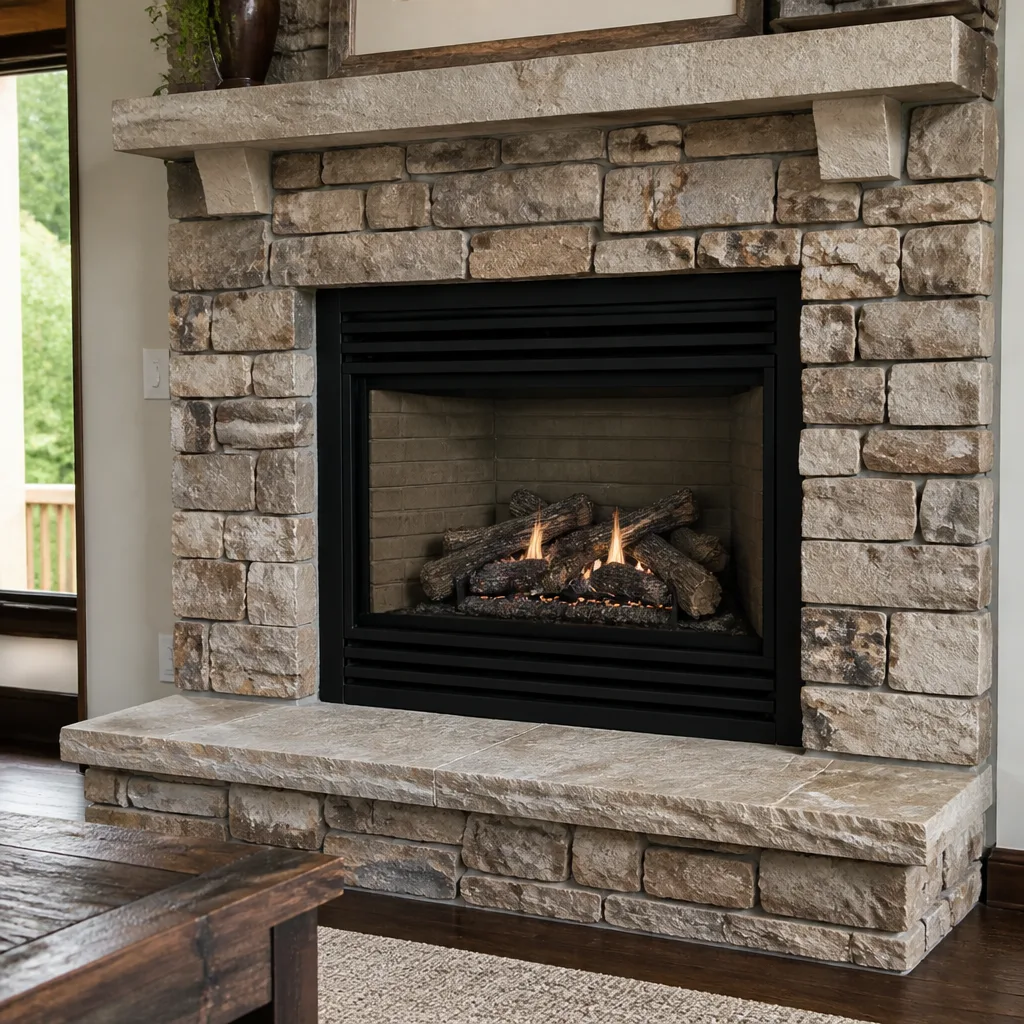 Gas fireplace service
Level 1 sweep and inspection to the NFPA 211 annual standard - flue, crown, cap, and flashing checked and photographed
Chimney sweep logs do not sweep chimneys. They loosen some creosote - which then falls where a brush and vacuum still have to collect it.
Chimney Cleaning Warning Signs: A Floral Park Homeowner’s Reference Guide
The white staining on the outside of a chimney that most homeowners assume is weathering is actually efflorescence, and it’s a direct signal that water is moving through the masonry. By the time that staining is visible on the exterior, the damage has already started inside the flue structure. That gap between what a warning sign looks like and what it actually means is where most chimney problems get missed. This guide names the specific signs we look for, explains the cause behind each one, and tells you which require action now versus next-season service. Whether your home is near the Floral Park village center or on a quieter residential street, this reference is built for the climate and housing stock you actually live with.
Quick Answer
Chimney cleaning warning signs in Floral Park fall into four categories: draft problems (smoke backing into the room), creosote buildup (smoky odor when the fireplace is idle, glazed black deposits on the smoke shelf), water intrusion (efflorescence, rusted damper, spalling brick), and structural deterioration (flaking mortar, cracked crown). One sign, glazed creosote inside the flue, means stop using the fireplace until a professional inspects it. Every other sign on this list has a window of days to months before it needs service.
Styles & brands we work with
- Sweep & inspection
- Caps & crowns
- Flue relining
- Masonry repair
- Gas fireplace service
Table of Contents
- What does a smoky odor tell you, and when?
- What does white staining on the exterior mean?
- Spalling brick and flaking mortar: structural or cosmetic?
- Warning signs inside the firebox most homeowners miss
- The one sign that means stop using the fireplace
- Creosote buildup stages and what each means
- Crown and cap failure: the water path most people ignore
- Sign-by-sign summary: cause, severity, and response timeline
What does a smoky odor tell you, and when?
A smoky odor during use is a draft problem. A smoky odor when the fireplace is idle is a different animal entirely. Both point to a chimney that needs attention, but the diagnosis and the fix are not the same, and treating one as the other is how homeowners end up paying for the wrong service.
When smoke smell appears only while the fire is burning, the chimney isn’t pulling. Common causes in Floral Park homes include a flue sized too large for the fireplace opening, a blocked or partially blocked flue, negative pressure in the room from a kitchen exhaust running nearby, or a firebox that’s been modified over the years in a way that changed the draft geometry. In some older Floral Park houses, a chimney built for a different appliance (an old furnace flue now used for a fireplace, for example) simply doesn’t have the right proportions for the draft it’s being asked to produce.
When the smell appears with the fireplace idle, the source is something sitting in the flue. Two causes dominate:
- Creosote: A strong, acrid, campfire-like smell that gets worse in warm weather or on humid days. The residue on the flue walls is releasing odor, and the volume of it matters.
- Animal intrusion: Birds, squirrels, or raccoons that have entered through an uncapped flue. The odor is musky or ammonia-like, and it usually appears suddenly rather than building over weeks.
We can tell the difference during the inspection by looking at the flue walls and the smoke shelf. If the wall is coated, it’s creosote. If there’s nesting material or animal evidence, it’s intrusion. Either way, a sweep resolves the immediate cause, and a cap resolves the intrusion problem permanently. Our chimney sweep includes a camera inspection so you can see what was in the flue before and after.
What does white staining on the exterior mean?
White, chalky staining on the outside of a chimney is efflorescence, and it means water is traveling through the masonry. Efflorescence is the salt deposit left behind when moisture moves through brick or mortar and evaporates at the surface, leaving the salts behind. It’s not cosmetic, and it’s not weathering in the ordinary sense.
The water source is usually one of four things:
- A failed chimney crown (the concrete cap on top of the chimney). Crowns crack as concrete ages and settle, and once cracked, water runs down into the masonry.
- A missing or damaged chimney cap that allows rain directly into the flue, where it wicks outward into the brick.
- Failed flashing where the chimney meets the roof, which lets roof water into the chimney structure.
- Porous brick or deteriorated mortar joints that absorb moisture directly.
The concerning part is the visible-versus-actual gap. Efflorescence appears on the exterior after water has already spent substantial time inside the structure. By the time you can see the staining from the yard, the brick interior and the flue lining have likely been wet for some time. In Floral Park’s climate, where mild winters mean fewer freeze events but consistent moisture from rain and marine-influenced air, this water path doesn’t do the same freeze-thaw damage seen in colder regions, but it does steadily degrade mortar and masonry adhesive over years.
What to do: an inspection confirms which of the four water paths is active. Fixing the crown and cap is the most common resolution, and it’s a preventive service that saves far more than it costs when compared to structural masonry repair later. We look at the full exterior system during inspection, not just the firebox, because the crown and cap are where the majority of these problems start. Our chimney cap & crown work addresses exactly this path.
Spalling brick and flaking mortar: structural or cosmetic?
Spalling brick is brick that has lost its face, usually in flakes or chunks that end up on the roof or the ground below. Flaking mortar is mortar that crumbles when rubbed. Both indicate a masonry problem that will get worse, but they’re different diagnoses, and the treatment differs.
Flaking mortar is often a re-pointing issue. Mortar joints are the sacrificial part of a masonry wall; over decades, they weather back, and re-pointing (tuck-pointing) replaces the deteriorated mortar and restores the joint. On its own, flaking mortar is a maintenance item.
Spalling brick is more serious. When brick itself is spalling, the masonry face is failing, and that usually means one of three causes:
- Water saturation. The same water path that produces efflorescence eventually forces the brick face to separate as the moisture exits through the face.
- Incompatible mortar. A previous repair used a hard mortar that doesn’t allow the brick to expand and contract in step with it, and the brick face is what fails under the stress.
- Heat damage. Bricks near a firebox that has been improperly used can spall from thermal stress.
Tuck-pointing alone is not enough when the underlying brick is spalling. Re-pointing the joints without addressing the moisture source, or without replacing the spalled units, just delays the same failure by a season or two. In our experience, the honest answer most Floral Park homeowners with spalling brick need to hear is that the repair has to address both the water path and the masonry units themselves. That’s a masonry repair scope, not a maintenance scope, and it’s the reason we do the whole assessment before quoting anything.
Warning signs inside the firebox most homeowners miss
Homeowners look at the fire. They don’t look at the smoke shelf, the damper, or the firebrick edges, and that’s where the diagnostic signs are. During a professional inspection, these are the interior signals we read:
Glazed creosote on the smoke shelf
The smoke shelf is the ledge just above the damper that redirects downdraft air back up the flue. Creosote collects there first, and if the deposit has turned glassy, black, and hard, it’s stage-three creosote. That’s the sign covered separately in the next section because it triggers a stop-use recommendation.
Rusted or stiff damper blades
The damper is the metal plate that opens and closes the flue. Rust on the blade means moisture has been condensing in the chimney above the damper and dripping onto it. That’s a water-intrusion signal, and it often accompanies efflorescence on the exterior. A damper that no longer opens smoothly (or doesn’t close) is a malfunction that affects both draft and heat loss when the fireplace is idle. This is typically fireplace repair work rather than a sweep service.
Deteriorating firebrick
Firebrick lines the firebox and is meant to handle heat the surrounding masonry can’t. When firebrick cracks, crumbles, or has gaps in the joints, heat can reach the surrounding structure directly. A small crack in a firebrick is often a normal wear item, but a firebox with multiple deteriorated bricks or wide joint gaps needs repair before it’s used again.
Broken or missing mortar joints inside the firebox
The mortar between firebrick is a high-temperature refractory mix, not standard mortar. When it cracks out, the firebox isn’t sealed, and heat and combustion products have a path where there shouldn’t be one. This is a step above cosmetic and should be repaired before the next heating season.
Persistent soot on the firebox face above the opening
If the firebox face (the brick facing into the room) shows fresh soot above the opening after a fire, smoke is escaping forward instead of up. That’s a draft problem, sometimes a firebox geometry issue and sometimes a flue blockage.
The one sign that means stop using the fireplace
If the flue has glazed, tar-like creosote deposits (stage three), stop burning until a professional inspects it. This is the one sign on the entire list that carries a stop-use recommendation, and it’s not a marketing scare. Glazed creosote is dense, semi-liquid at flame temperatures, and it burns hotter and faster than the creosote that preceded it. A normal chimney fire risk becomes significantly higher when the deposit has reached that stage.
What to do if you’ve already been using the fireplace and you suspect glazed creosote:
- Stop burning now. Don’t have another fire while you wait for the inspection.
- Call for an inspection. The sweep and camera inspection will confirm the stage of the deposit and the condition of the flue. Call (877) 792-7251. We answer 24/7. Fast dispatch from 7am to 7pm, Sunday through Friday.
- Don’t try to remove it yourself. Stage-three creosote is difficult to remove even with professional rotary equipment. Home attempts at chemical treatment or brushing are ineffective at this stage and can damage the flue.
- Have the flue assessed for HeatShield resurfacing. Once the deposit is removed, a damaged or pitted flue often benefits from ceramic resurfacing with HeatShield to restore a smooth, sealed surface that makes future creosote adhesion easier to manage. That’s a restoration step most sweep-only services can’t offer.
If you’ve had a chimney fire (a loud roaring sound, a hot smell, or visible sparks from the top) and haven’t had the chimney inspected since, treat it the same way: no fire until it’s been seen by a professional.
Creosote buildup stages and what each means
Creosote forms in three stages, and each one changes the service recommendation. Most homeowners never see the staging because it’s inside the flue, but the staging is exactly what the sweep is evaluating during the cleaning.
Stage one: Soot and light flaky deposits. The flue wall is still visible through the deposit. This is routine buildup after a season of burning and is removed with standard sweeping.
Stage two: Hard, crusty deposits that require rotary brushing or a chemical treatment to remove. The flue wall is partly obscured. This stage indicates the fireplace has been running with restricted draft or has been burning green or damp wood, both of which produce more creosote per cord.
Stage three: Glazed, tar-like deposits. The flue wall is obscured or completely covered. This stage is where the stop-use recommendation applies and where the chimney professional will recommend a specific removal approach before any additional burning.
In our experience, Floral Park homes that burn on a regular schedule with well-seasoned wood tend to stay in stage one and two. Homes that burn occasionally but with wood that’s not fully dried often hit stage two faster than expected, because the smoldering fires that produce more creosote are also the ones that feel like they’re “burning longer.” A sweep at the end of the burning season keeps the accumulation from compounding year over year.
Crown and cap failure: the water path most people ignore
The chimney crown and cap are the top-of-structure defenses, and they’re the two components most often skipped in a basic sweep visit. A chimney sweep who cleans the flue but doesn’t look up at the crown and cap is missing the majority of the water intrusion that causes the efflorescence, spalling, and rusted damper signals on this list.
What to check on the exterior:
- The crown: The concrete surface sloping away from the flue at the top of the chimney. Cracks, chips, or a crown that’s pulling away from the flue mean water can enter the masonry core.
- The cap: The screened cover over the flue. Missing, loose, or rusted-through caps allow rain, animals, and debris into the flue directly.
- The flashing: Where the chimney meets the roof, the flashing is the seal. Lifted or failed flashing lets roof water into the chimney structure.
- The mortar joints at the top courses: These are the most exposed to weather and the first to fail.
We use professional-grade cap and crown materials, and we work with established brands like Gelco and Olympia Chimney for the components that go on the top of the chimney. The point of specifying professional materials at the crown and cap is durability: the crown and cap have to hold up to the next several seasons, not just the next one. That’s the reason these components are part of the standard inspection rather than an add-on. See our chimney cap & crown page for the details of what the installation involves.
Sign-by-sign summary: cause, severity, and response timeline
Here’s the reference table for every warning sign in this guide. The response timeline is what most homeowners want and what most guides leave out.
- Smoky odor during use – Cause: draft problem (sizing, blockage, negative pressure). Severity: moderate. Timeline: book an inspection within the next few weeks; don’t burn if smoke is entering the room noticeably.
- Smoky odor when fireplace is idle – Cause: creosote or animal intrusion. Severity: moderate to high depending on cause. Timeline: inspect within the next few weeks; if animal intrusion is suspected, sooner.
- White staining on exterior (efflorescence) – Cause: water moving through masonry. Severity: high. Timeline: inspect within the next month; address the water source before the next wet season.
- Spalling brick – Cause: saturation, incompatible mortar, or heat damage. Severity: high. Timeline: inspect within the next few weeks.
- Flaking mortar – Cause: normal weathering. Severity: low to moderate. Timeline: can wait until the next service visit unless accompanied by spalling or efflorescence.
- Rusted damper blade – Cause: moisture condensing in the chimney. Severity: moderate. Timeline: schedule fireplace repair with the next inspection.
- Deteriorating firebrick or cracked firebox mortar – Cause: thermal wear. Severity: moderate. Timeline: repair before the next season; don’t burn for long if the firebox is compromised.
- Glazed black creosote on the smoke shelf or flue – Cause: stage-three creosote deposition. Severity: critical. Timeline: stop burning immediately, inspect now.
- Soot above the firebox opening after fires – Cause: draft problem. Severity: moderate. Timeline: inspect within the next few weeks.
- Visible crack in the chimney crown – Cause: age and settling. Severity: high. Timeline: crown repair within the next month or before the next wet season.
- Missing or loose cap – Cause: age, wind damage. Severity: high. Timeline: install a new cap before the next wet season.
- Loud roaring sound while the fireplace is burning – Cause: chimney fire. Severity: critical. Timeline: stop burning, inspect before any further use.
Why We Look at the Whole System
A chimney sweep is a starting point, not an endpoint. The five disciplines of chimney care (sweeping, inspection, fireplace repair, cap and crown work, and structural chimney repair) are connected, and a warning sign in one area usually points to a cause in another. That’s why our inspections evaluate the full system rather than just running a brush through the flue and calling it done.
In Floral Park, the housing stock varies enough that no single default service covers every home. Older houses near the village center often have chimney systems built for appliances that are no longer in use, which affects draft. Newer homes on the surrounding residential streets have different construction that puts more weight on cap and crown performance. The only way to know which applies to your chimney is to have it looked at, in person, by someone who works on chimneys specifically.
We carry professional-grade products from DuraFlex, HeatShield, Famco, and Olympia Chimney because these are the systems specified when a repair needs to hold for more than one season. A DuraFlex flexible liner is the professional choice for relining an aging flue. HeatShield ceramic resurfacing restores integrity to a flue that doesn’t need full replacement. We do all five of our core services in one company, so you’re not coordinating a sweep, a repair crew, and a mason separately. The local pro is licensed and insured as the state requires, and every job is priced by a written estimate before any work begins. Which brings us back to the inspection: an honest assessment, with camera evidence you can see for yourself, is how this starts.
See the difference
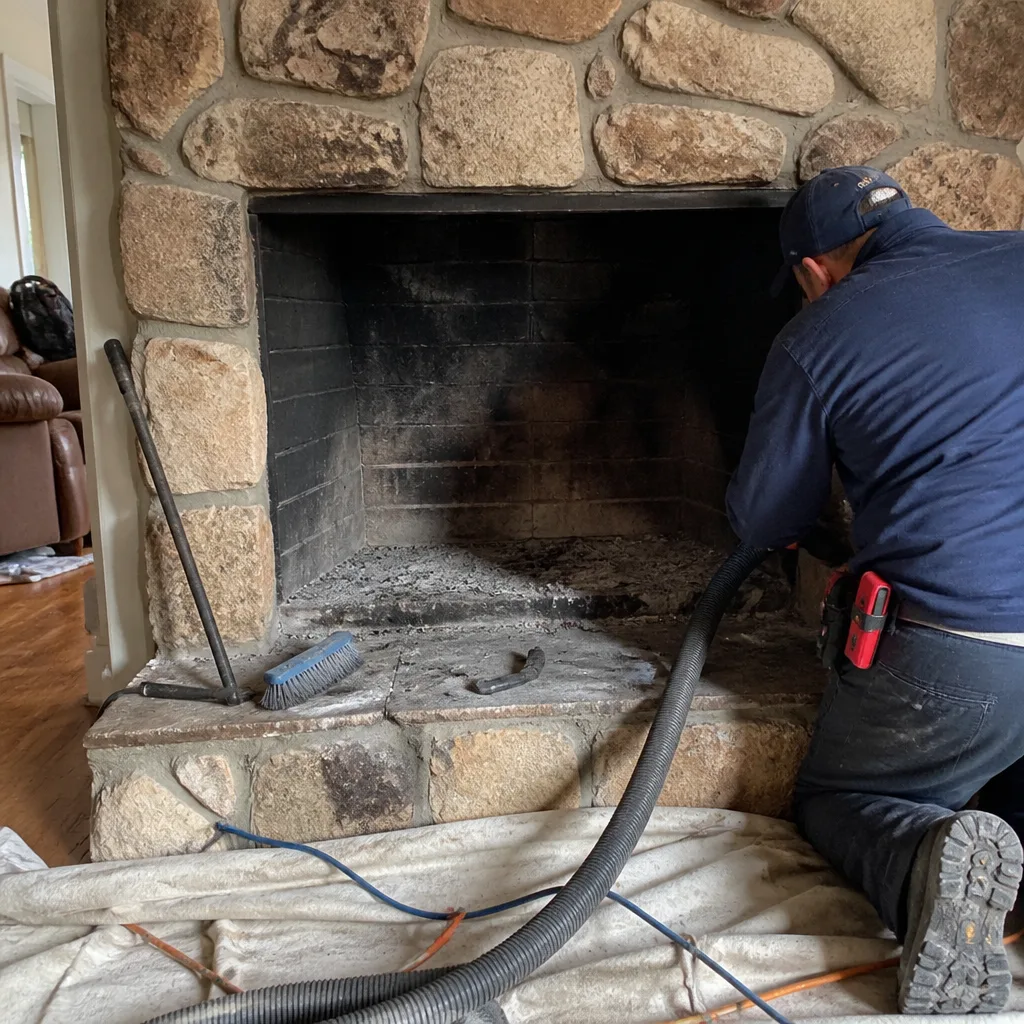 Before
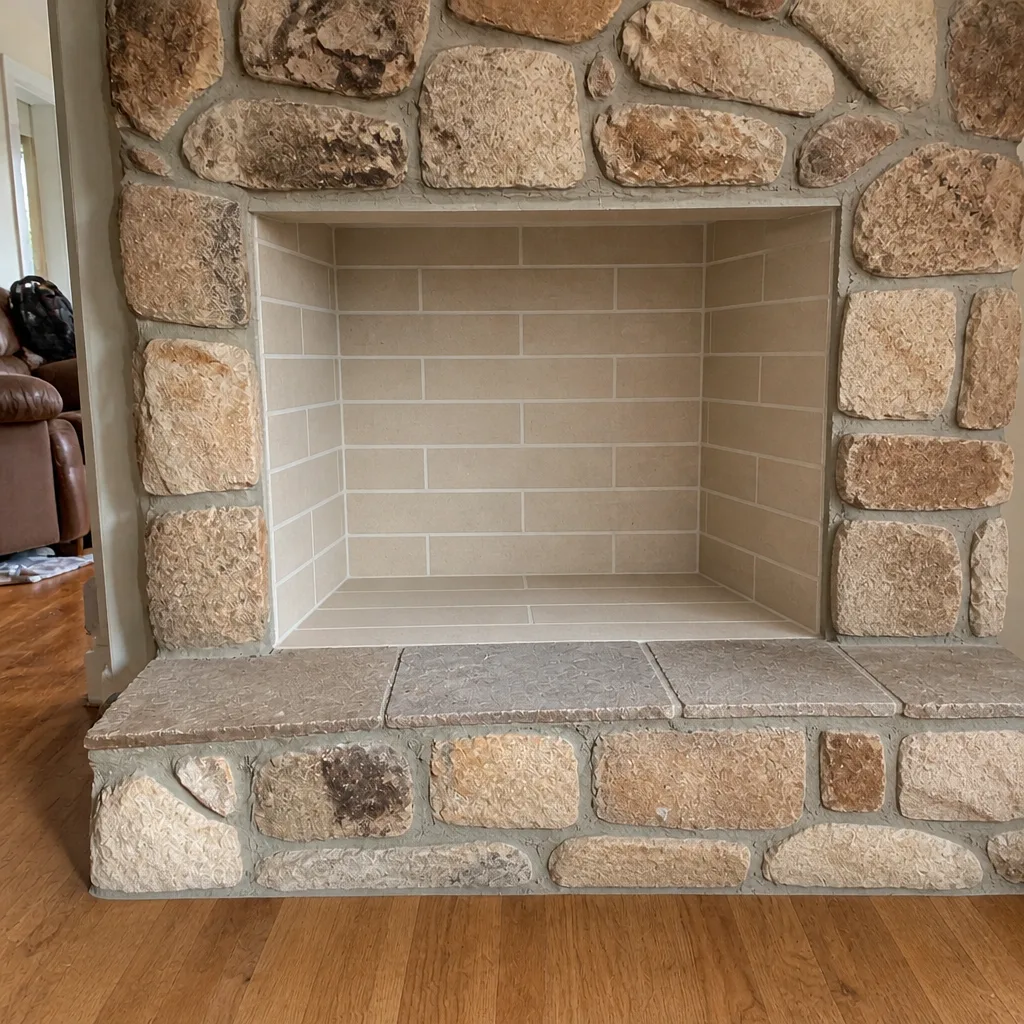 After
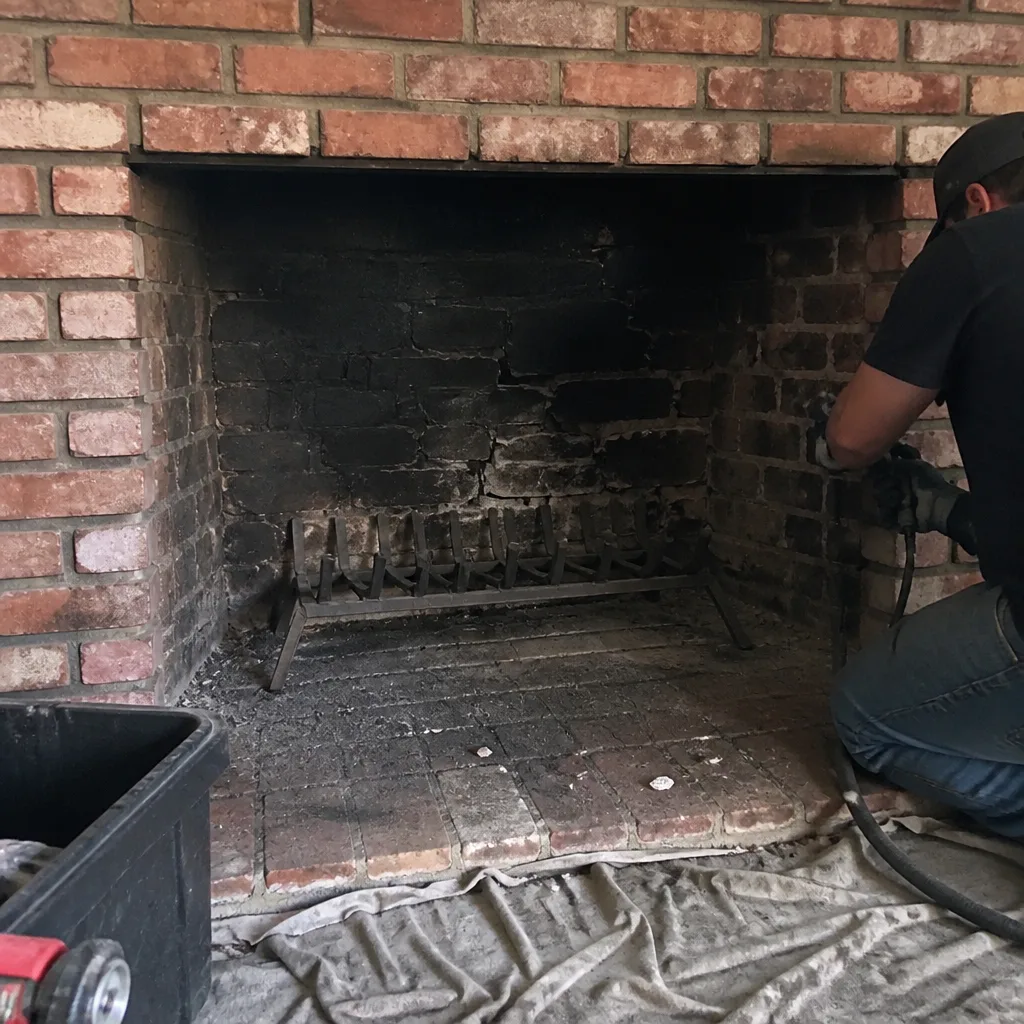 Before
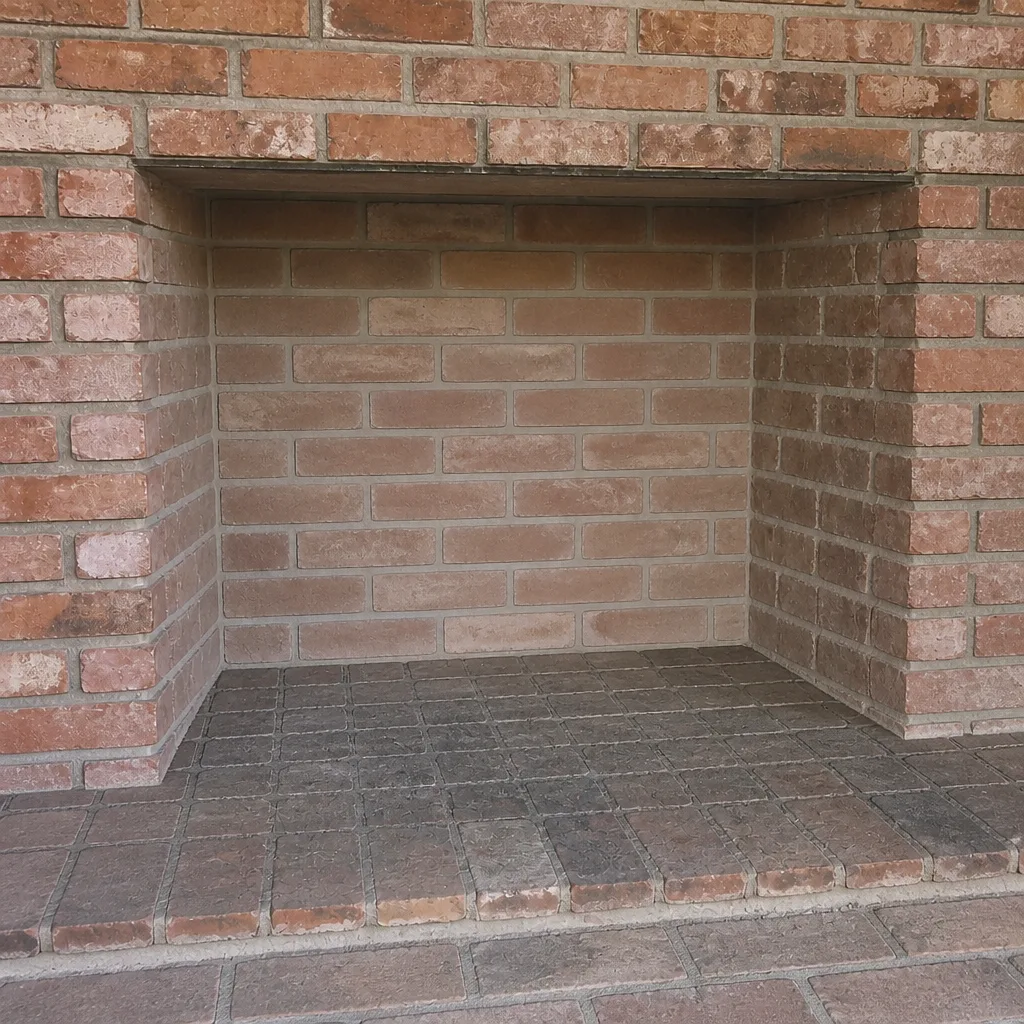 After
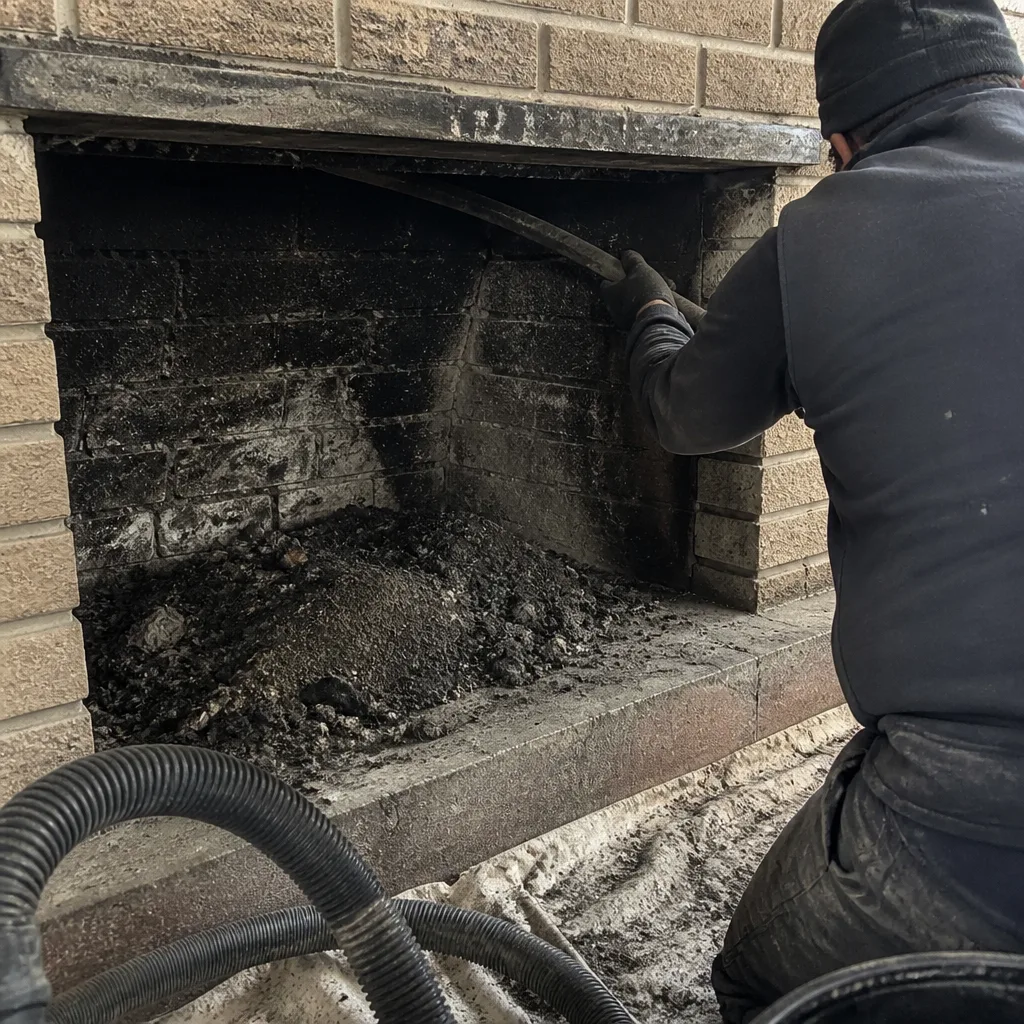 Before
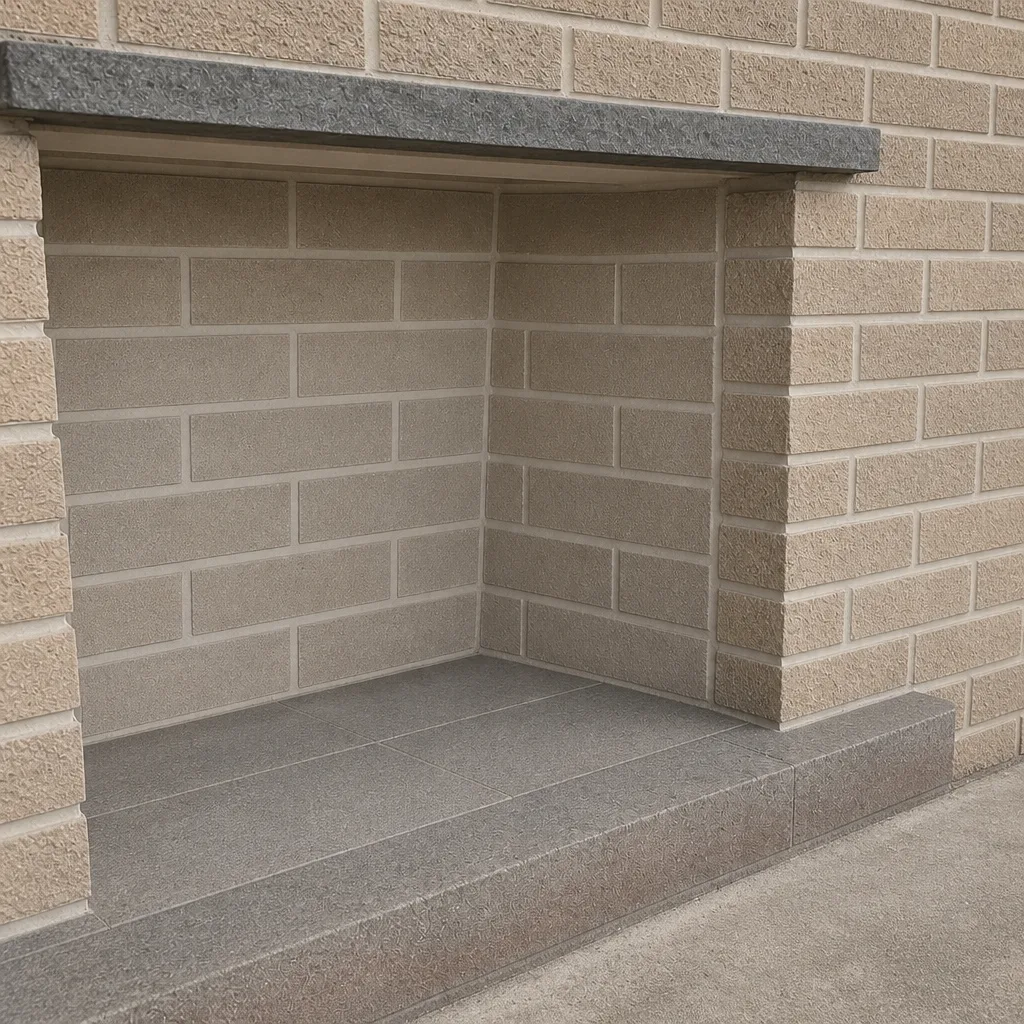 After
Common Mistakes to Avoid
- Assuming efflorescence is just weathering. The white staining looks like normal brick aging, but it’s the result of moisture already moving through your masonry. Ignoring it until a brick face falls off turns a crown and cap repair into a structural repair.
- Confusing the two smoky odors. Treating an idle-fireplace smell with a draft fix, or a draft problem with a sweep alone, leaves the root cause in place. Note when the smell appears, because that timing is the diagnostic clue.
- Burning with stage-three creosote in the flue. If the deposit is glazed and black, the chimney is past the point where a normal sweep and another season’s burning are compatible. Stop, inspect, then burn again.
- Doing tuck-pointing on spalling brick without fixing the water source. Re-pointing is a temporary cosmetic fix if the moisture path behind the spalling hasn’t been addressed. The same failure returns within a season or two.
- Skipping the crown and cap. A sweep that doesn’t include a crown and cap inspection is missing the most common source of chimney water damage. Ask specifically whether the crown and cap were evaluated.
- Waiting until a smell or a stain appears to have the chimney looked at. An annual inspection catches the accumulation and the crown damage while it’s still a small repair, rather than after the roof, the flashing, and the flue all need attention at once.
- Trying stage-three creosote removal as a DIY project. The chemical and rotary tools required for glazed creosote are professional equipment. A home attempt can damage the flue and leave the deposit in place.
When to Call a Professional
Call a chimney professional if any of these apply: you’ve noticed glazed black deposits inside the firebox or flue (stop burning until inspected); you see white staining, spalling brick, or visible cracks in the chimney crown; your damper is rusted or won’t operate smoothly; you smell smoke in the room when the fireplace is idle; you’ve had a chimney fire or a loud roaring sound while the fireplace was in use; or it’s been more than a year since your last inspection. In each case, the inspection answers two questions: what’s actually happening, and what’s the timeline before it needs to be addressed. Some of these are next-month jobs, some are next-season, and one is a stop-now. A professional tells you which is which without trying to sell you work you don’t need. Chimney Sweep Floral Park offers free estimates in Floral Park. Call (877) 792-7251. We answer 24/7. Fast dispatch from 7am to 7pm, Sunday through Friday.
Frequently Asked Questions
The most common warning signs we see in Floral Park homes are smoky odor when the fireplace is idle, white efflorescence staining on the exterior brick, rusted damper blades, and dark deposits on the smoke shelf. Call (877) 792-7251 for an exact quote; estimates are free.
Chimney sweep pricing in Floral Park depends on the flue size, the level of creosote buildup, and whether the job includes a camera inspection and exterior crown and cap review. Every job is priced by a written estimate after the inspection. Call (877) 792-7251 for a free estimate and a flat-price sweep agreed before booking.
Not always. Many flues that look compromised on a quick glance can be restored with HeatShield ceramic resurfacing rather than replaced. The only way to know is to inspect the flue with a camera. We carry both DuraFlex flexible liner systems and HeatShield because sometimes the answer is replacement and sometimes it’s resurfacing, and the repair has to hold. Call (877) 792-7251 to schedule an inspection.
At least once per burning season for a wood-burning fireplace, and more often if you’re burning frequently or the flue shows heavy creosote accumulation. Gas fireplaces can go longer but still need an annual inspection. Call (877) 792-7251 to book the sweep before the season starts.
Creosote accumulates in stages, and the risk of a chimney fire rises as the deposit gets denser. The other risk is water intrusion: a cracked crown or a missing cap lets moisture into the masonry, and the damage is invisible until it shows on the exterior or reaches the firebox. Call (877) 792-7251 to schedule an inspection and a sweep.
Yes, but tuck-pointing alone usually isn’t enough when brick is spalling. The repair has to address the underlying water source (typically the crown, cap, or flashing) as well as the deteriorated brick and mortar. Call (877) 792-7251 for a free estimate.
The Bottom Line
The warning signs in this guide fall into three response categories: stop now (glazed stage-three creosote and suspected chimney fires), address within the next month (efflorescence, spalling brick, cracked crown, failed cap), and address within the season (rusted damper, deteriorating firebrick, smoky odor during use). The most useful thing a Floral Park homeowner can do is look at the chimney once a season with this list in hand, check the top and the firebox, and note the timing of any smoky odor. The second most useful thing is to have the chimney inspected once a year so the accumulation and exterior damage get caught while it’s still a small repair. Everything else on this list gets more expensive the longer it sits. Call (877) 792-7251 to book an inspection and a sweep with Chimney Sweep Floral Park. We answer 24/7. Fast dispatch from 7am to 7pm, Sunday through Friday.
Written by the team at Chimney Sweep Floral Park.