
Last updated November 25, 2026
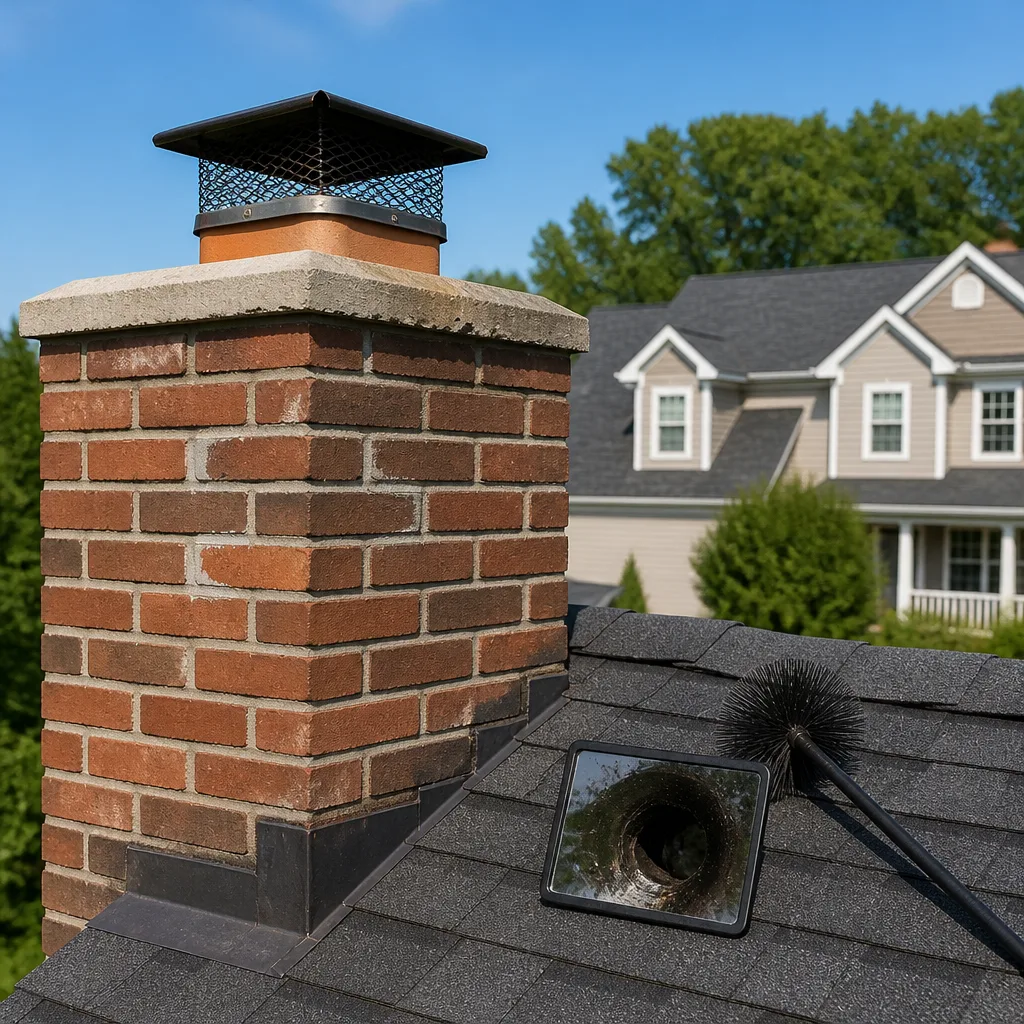 Sweep & inspection
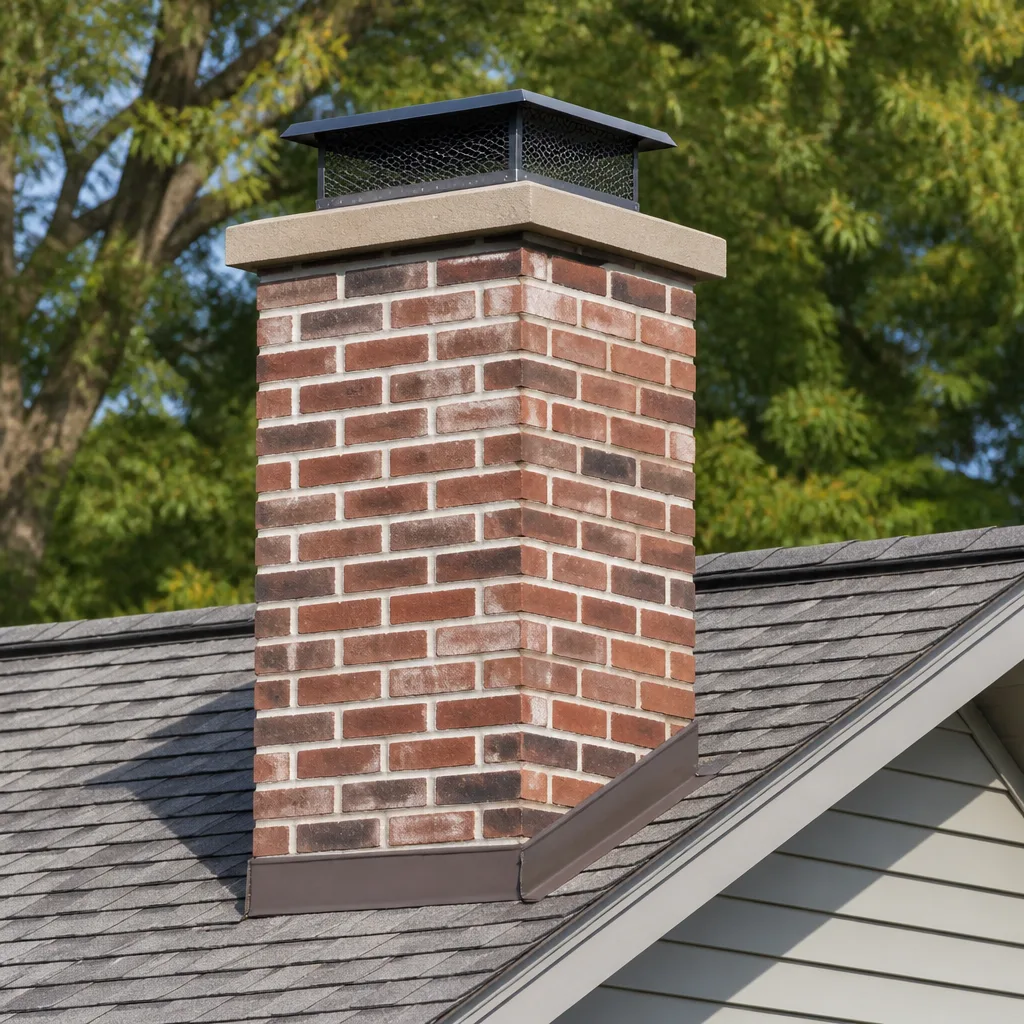 Caps & crowns
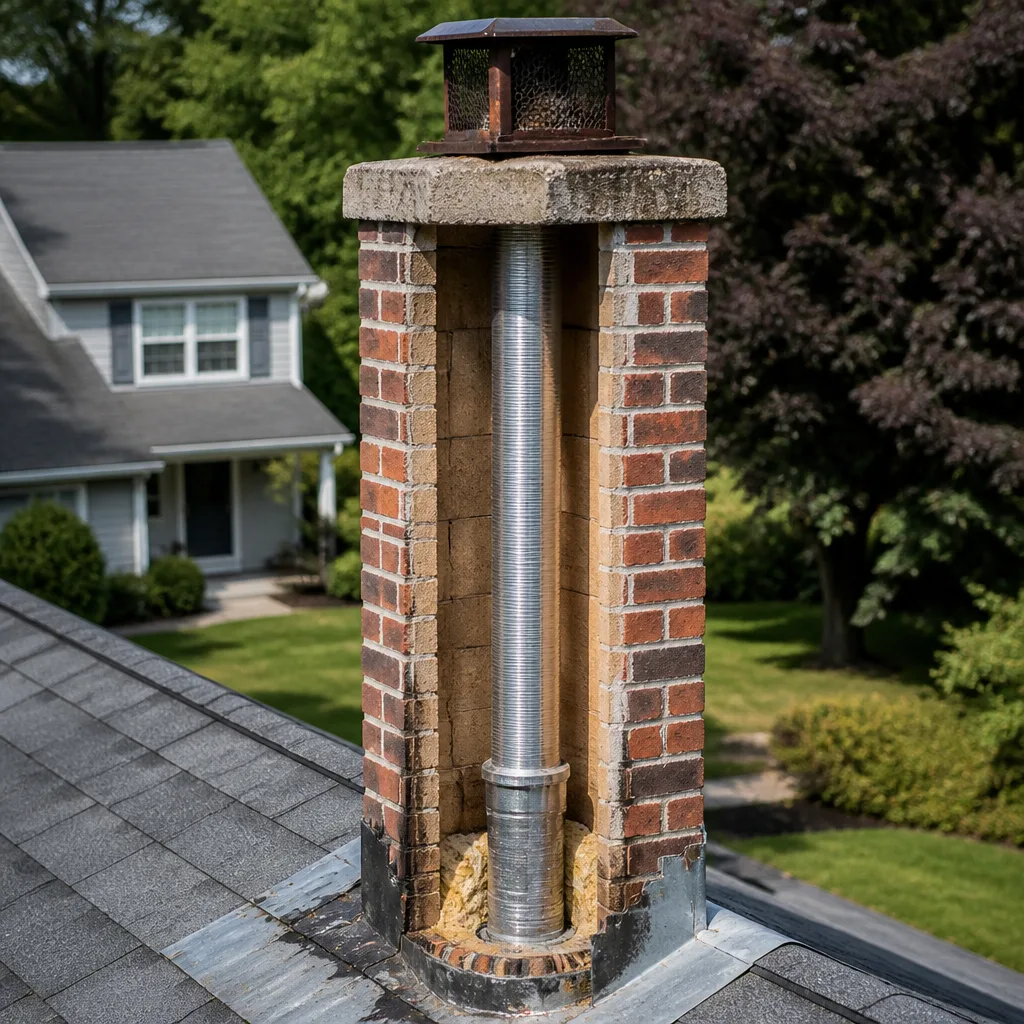 Flue relining
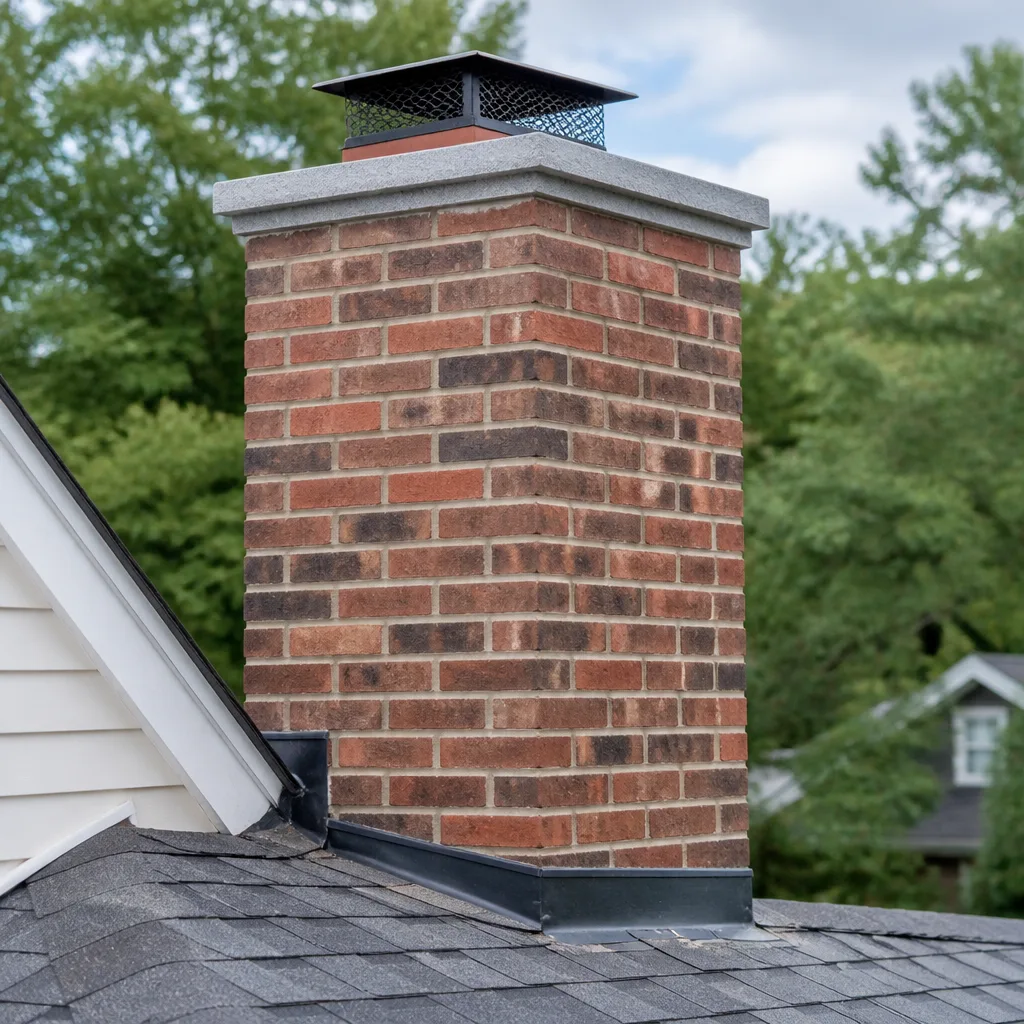 Masonry repair
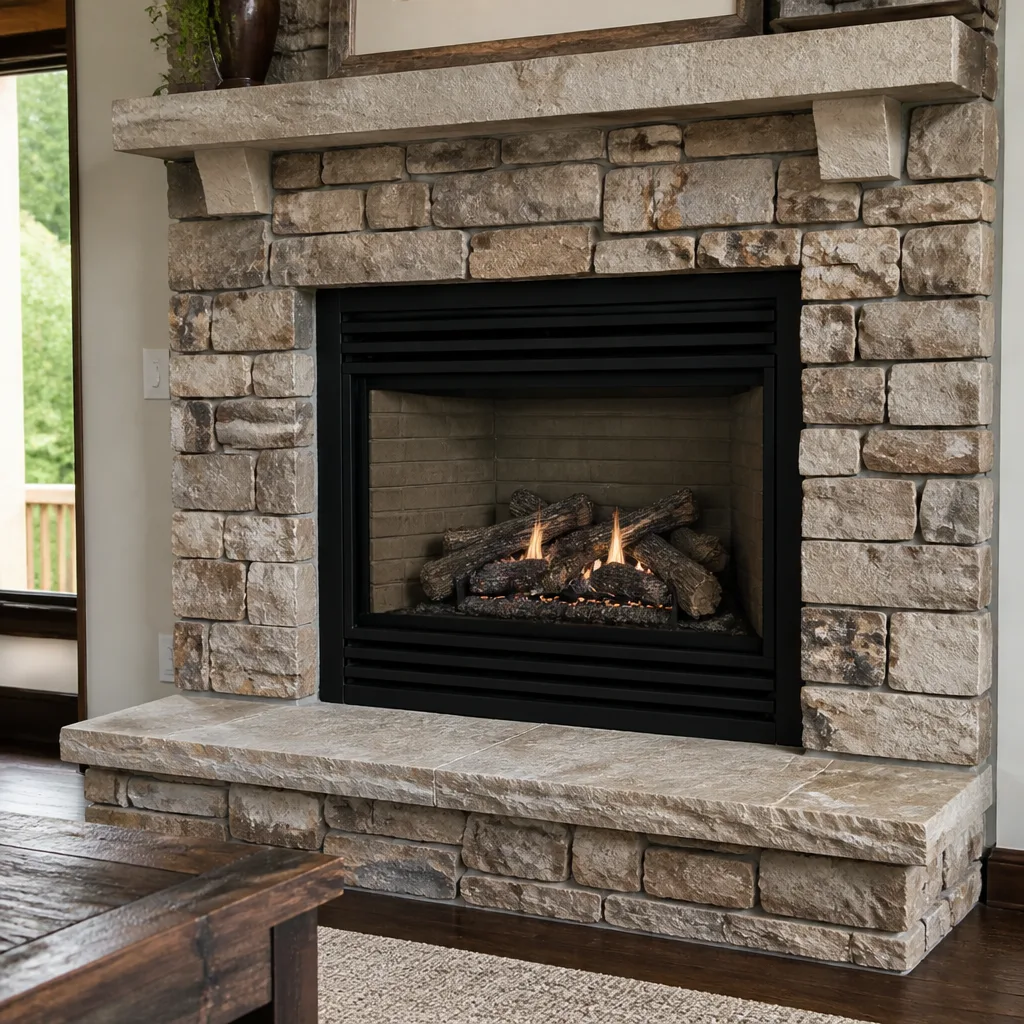 Gas fireplace service
Level 1 sweep and inspection to the NFPA 211 annual standard - flue, crown, cap, and flashing checked and photographed
Chimney sweep logs do not sweep chimneys. They loosen some creosote - which then falls where a brush and vacuum still have to collect it.
How to Hire a Chimney Cleaning Contractor in Floral Park: A Step-by-Step Guide
Any handyman with a brush and a shop vac can market chimney sweeping in California, because no state license is required to run the brush. That means vetting the person holding it falls entirely on you. The credential gap between a certified chimney specialist and a generalist who sweeps on the side is wide, and the consequences of hiring wrong don’t show up in your wallet first. They show up in your flue, months later, when a hidden crack or a failing crown turns a routine cleaning into a structural repair. In this guide we’ll walk through what CSIA certification really means, the five questions to ask before you book anyone in Floral Park, how to read chimney reviews and quotes for the signals that matter, and the contract terms that should be in writing before any work starts.
Quick Answer
To hire a chimney cleaning contractor in Floral Park, verify CSIA certification directly rather than trusting a logo, confirm the contractor carries liability coverage that specifically addresses chimney fire damage, ask what the inspection covers beyond the firebox, and insist on written scope and pricing before work begins. The lowest quote is often an inspection-only sweep with no diagnostic follow-through, so weigh what’s included, not just the price. Chimney Sweep Floral Park handles sweeping, inspection, and repair as one job, with estimates that are free and set per job in writing.
Styles & brands we work with
- Sweep & inspection
- Caps & crowns
- Flue relining
- Masonry repair
- Gas fireplace service
Table of Contents
- Why Chimney Work Has No State License in California
- What CSIA Certification Actually Means (and How to Verify It)
- The Five Questions to Ask Before You Book
- How to Read Chimney Contractor Pricing in Floral Park
- How to Evaluate Online Reviews for Chimney Work
- Contract Terms That Should Be in Writing
- Your Chimney System, Not Just Your Flue
- When to Book a Sweep in Floral Park
Why Chimney Work Has No State License in California
California does not license chimney sweeps. There’s no state board exam, no journeyman card, no license number to check. That’s the single most important fact in this guide, because it means the credentials you’d normally lean on to screen a contractor simply don’t exist for this trade. Anyone can print “chimney sweep” on a business card and drive to your door in Floral Park.
What does exist is voluntary certification through the Chimney Safety Institute of America, and it’s the closest thing to a real standard the trade has. A certified sweep has passed a proctored exam, signed a code of ethics, and committed to ongoing education. That’s meaningful, but only if you verify it rather than assume it. A logo image on a website costs nothing to copy.
Here’s why this matters more than it might seem. Chimney work has two failure modes that a homeowner can’t see. The first is a hidden defect: a hairline crack in a flue tile, a crown that has pulled away from the masonry, a cap that’s missing after wind. None of these announce themselves. The second is the work itself: a liner that was installed without the right adhesive, a cap fastened with the wrong hardware, a repair that looks finished but won’t hold through a rainy season.
A generalist who sweeps on the side can handle the brushing. What they usually can’t do is diagnose what the brushing reveals and repair it properly. In our experience, that’s the fork in the road. A sweep is a starting point, not an endpoint. When you hire for the sweep alone, you’re often paying for the diagnosis and then finding a separate contractor to act on it.
Floral Park’s housing stock reflects this. Many homes have chimneys that were built decades ago and have been through multiple owners, some of whom made repairs with whatever was on hand. An inspection is where that history surfaces. The right contractor reads it, explains it, and can fix it themselves rather than handing you off.
What CSIA Certification Actually Means (and How to Verify It)
CSIA certification is a credential earned by passing an exam on chimney and venting fundamentals, NFPA 211 code requirements, and safety practices, then maintaining it through continuing education. It’s not a lifetime badge. It requires renewal, which means an active certification tells you something a business card can’t: that the technician has kept up with current standards, not just passed a test once.
Verification is straightforward, and you should do it yourself rather than take a contractor’s word for it.
- Ask for the name of the certified technician who will actually be at your home, not just the company name.
- Search that name in the CSIA’s public certified-sweep directory.
- Confirm the certification is current, not expired.
- Ask whether the technician is certified for inspection as well as sweeping, since these are different scopes.
What certification doesn’t mean: it isn’t a state license, so it doesn’t give you a government registry to fall back on. It also doesn’t tell you whether the technician carries liability insurance. Those are two separate checks, and you need both.
One more thing worth knowing: a chimney professional who handles repairs using HeatShield ceramic resurfacing, Gelco or Olympia Chimney products has to be trained on those specific systems. When a contractor names those brands, it usually signals trade-level product knowledge, not a logo wall. When a sweep-only operator can’t name them, that’s often because they don’t do repairs at all.
In our experience, the certification question is the easiest one to ask and the one most homeowners skip. Ask it first. Everything else in this guide builds on it.
The Five Questions to Ask Before You Book
Before any contractor comes to your Floral Park home, these five questions should feel routine, not adversarial. A serious professional will answer them without hesitation. Reluctance, a rehearsed answer, or a redirect to the website is a signal.
1. Who’s CSIA certified, and can I verify it? Ask for a name and check it. A company that says “we’re all certified” without telling you who is coming is telling you nothing.
2. Does your liability coverage address chimney fire damage specifically? This is the one most homeowners never ask. General contractor liability often excludes damage from a chimney fire or from an improperly installed liner. Ask whether their policy covers fire damage resulting from the work. Don’t accept “we’re fully insured” as the answer; ask what the policy actually covers for chimney work.
3. What does your inspection cover? The flue is not the whole chimney. Ask specifically whether the inspection looks at the crown, the cap, the firebox, the smoke chamber, and the chimney exterior. If the answer stops at “we sweep and check the flue,” you’ve found a sweep, not a system inspection.
4. Do you repair what you find, or do you refer it out? A sweep-only operator will hand you off. A full-scope specialist handles sweeping, inspection, repair, cap and crown, and fireplace work as one job. Single-company accountability matters, because responsibility for a problem doesn’t get handed off cleanly.
5. Will I get the findings in writing before any repair is priced? The answer should be yes, and the findings should be things you can see for yourself: a photo of a cracked tile, an image of crown separation, a look down the flue. No photo, no recommendation.
Ask these in the first phone call. You’ll learn more in five minutes than in an hour of reading reviews. If a contractor can’t answer all five, the decision is easy.
How to Read Chimney Contractor Pricing in Floral Park
Chimney pricing is per job, and it’s set by a written estimate. That’s the honest answer, and it means there’s no standard rate card you can compare line by line across contractors. What you can compare is what’s included in each estimate.
Here’s the trap. The lowest quote is usually the lowest because it’s a sweep and nothing else. No diagnostic inspection, no photo report, no scope of what was found beyond the flue. You pay the smaller number, then discover you need a separate inspection and a separate repair estimate from someone else. The savings disappear and you’ve now dealt with two contractors.
What a serious estimate should include:
- A defined scope: what’s being swept, what’s being inspected, and what the inspection will look at.
- A written record of findings, with photos.
- Separate pricing for any repair, clearly labeled as an estimate and based on the findings.
- A clear statement of what happens if the inspection turns up something that can wait.
That last point is the one that separates a good contractor from a hard sell. You should find out when a repair is unnecessary for now. A good sweep can safely wait, and a good contractor will tell you when that’s true. A crack in the crown, a failing cap, or a liner that’s lost integrity, on the other hand, are things that worsen quietly and shouldn’t wait indefinitely.
One way to check pricing: ask how the repair would actually be done. If the answer involves HeatShield ceramic resurfacing, that’s a specialized solution that restores liner integrity without full replacement. If it involves a DuraFlex flexible liner, that’s professional-grade relining for a flue that’s too far gone for resurfacing. A contractor who can describe both, and explain why one applies and not the other, is pricing a repair. A contractor who can only quote a sweep is pricing a visit.
Prices are estimates until the job is scoped and written up. Ask what’s included.
How to Evaluate Online Reviews for Chimney Work
Star ratings tell you almost nothing about chimney work. Nearly every chimney contractor has four or five stars, because the review reflects whether someone was polite and on time, not whether they found the crown separation before it got worse. The reviews that matter are specific about findings and repairs.
Look for reviewers who mention what the contractor actually discovered. “They found a cracked flue tile and showed me the photo” is a useful review. “Great service, very friendly” is not. A reviewer who describes a repair scope, a written estimate, or a follow-up visit is giving you a look at how the company operates.
What to weigh:
- Reviewers who name a specific finding (crown, cap, liner, smoke chamber) rather than just a category (“inspected the chimney”).
- Reviewers who mention that the contractor told them something could wait, or didn’t push a repair.
- Reviews that describe the photo report or written findings.
- Repeated mentions of the same brand of repair, which suggests real work rather than a one-off.
What to discount:
- Reviews that only praise speed and friendliness with no mention of what was done.
- A cluster of identical-sounding reviews, which often indicates a prompt to “leave us a review” that nobody personalized.
- Complaints about not getting findings in writing, or a repair quoting that shifted after the fact.
In Floral Park, where many older chimneys have seen prior repairs, a review that mentions a specific issue and a specific outcome is far more useful than a generic five-star line. Search the reviews for the words “crown,” “liner,” “cap,” and “photo.” If none appear, you’re reading a review of a sweep, not a chimney contractor.
And read the negative reviews for one specific thing: whether the contractor acknowledged a problem and fixed it. A single negative review with a reasonable response and a follow-up visit tells you more than twenty perfect ones.
Contract Terms That Should Be in Writing
Nothing should start on a handshake. Before a brush touches your Floral Park flue, you should have something in writing that lays out the scope, the pricing, and the findings process. The absence of these terms is itself a signal.
What should be in writing:
- The scope of the sweep. Which portion of the system is being cleaned, and how.
- The scope of the inspection. What will be examined: firebox, smoke chamber, flue, crown, cap, and exterior masonry.
- The pricing for the sweep. A stated number, not a range that gets adjusted after arrival.
- The findings process. Confirmation that findings will be documented with photos and provided to you before any repair is quoted.
- The repair estimate. Any repair pricing should be based on the findings and presented separately from the sweep.
- A statement about work that can wait. The contractor should say plainly whether anything can be deferred without risk.
What the absence of these terms signals: a contractor who is selling a visit, not an inspection with follow-through. If someone can’t put the scope of an inspection in writing, they probably aren’t doing one.
One more term to ask about, even though it may not appear in a short written scope: who is accountable if a repair fails. A contractor who handles the whole job, from sweep to repair to cap and crown, has clear accountability. A contractor who sweeps and then hands you to a separate repair crew has an easy place to point. In our experience, single-company accountability across the full job is worth more than a slightly lower price from a two-crew arrangement.
Your Chimney System, Not Just Your Flue
The single biggest gap in chimney service is the contractor who only thinks about the flue. Your chimney is a system, and the flue is one part of it. The crown sheds water off the top of the masonry. The cap keeps rain and animals out of the flue opening. The firebox and smoke chamber handle combustion. The masonry holds it all together. A problem in any one of these can affect the others, and the most common source of structural damage is water getting in where it shouldn’t.
That’s why a proper inspection evaluates the whole system, not just the inside of the pipe. A sweep who looks down the flue, brushes it, and leaves has checked one part of five. A full inspection catches the crown that’s pulled away, the cap that’s missing fasteners, the firebox mortar that’s receded, and the liner that’s lost integrity, before each one becomes a structural repair.
Here’s where brand knowledge matters as evidence of craft. A contractor who carries HeatShield, Gelco, Olympia Chimney, and Famco isn’t stocking logos; they’re stocking the materials the repair requires. HeatShield restores a damaged liner’s integrity without a full replacement. Gelco handles crown and masonry repair. Olympia Chimney and Famco supply the caps and components that hold up. When a contractor can tell you which of these applies to your chimney and why, the recommendation is grounded in materials, not sales.
For the cap and crown specifically, we look for the issues that cause most of the water intrusion: a crown that’s cracked or separated from the flue, and a cap that’s gone or damaged. Both are preventive work. Getting chimney cap & crown service done before the next rainy season is far cheaper than repairing the masonry that water would have reached.
If fireplace components are involved, fireplace repair covers the firebox, damper, and related parts. The point is that all of it sits in one accountability chain. A sweep is a starting point, not an endpoint.
When to Book a Sweep in Floral Park
The urgency in chimney care is seasonal, not hourly. The right time to book a sweep is before burning season, not in the middle of it. That’s when a contractor has the schedule to do a full inspection and any repair without cutting corners, and when a repair has time to be completed before the fireplace is in use again.
Floral Park winters are mild compared with most of the country, and that has a specific effect on chimney maintenance. The heating season is longer and less concentrated than in a cold climate, so the chimney cycles through more warm-up and cool-down than you’d expect. Each cycle moves the masonry a little. Crowns develop hairline cracks. Caps loosen. The fireplace gets used for more months of the year, not less.
That makes late summer and early fall the sensible window. If you’ve just bought a home in Floral Park and haven’t had the chimney inspected, book it before the first fire. If you’ve been told by a home inspector that repairs are needed, book an inspection that produces photos you can see before any repair is quoted. If you’ve inherited an older system and don’t know its history, book the inspection and expect to learn something.
What actually happens if you skip it: creosote builds up in the flue, and a chimney fire becomes a real risk rather than a theoretical one. Carbon monoxide can back up into the home if the flue is blocked or compromised. A missing cap lets water and animals in. A sweep is what finds those things before they compound. A proper chimney sweep in Floral Park is the starting point for all of it, and the inspection is what makes the sweep worth more than the brush.
It’s not about speed; it’s about doing it before the season, when the work can be done well.
Common Mistakes to Avoid
- Trusting a logo instead of verifying certification. A CSIA badge on a website is an image file. Ask for the name of the certified technician who will be at your home and check the directory yourself.
- Choosing the lowest quote without reading the scope. A low price usually means a sweep-only visit with no diagnostic inspection. You’ll pay twice: once for the sweep, then again for the inspection and repair you actually needed.
- Never asking about liability coverage for chimney fire damage. General contractor insurance often excludes fire damage from chimney work. If the coverage doesn’t address it, you’re carrying the risk.
- Booking a sweep without an inspection. The sweep cleans the flue. The inspection is what finds the crown separation, the missing cap, and the liner problem before they become structural.
- Accepting repairs without photo evidence. If a contractor tells you the liner needs thousands of dollars of work, ask to see the photo of the problem. No photo, no recommendation.
- Hiring a generalist to do repair work. A handyman can run a brush. Repairing a liner, resurfacing with HeatShield, or installing a cap and crown correctly requires a chimney specialist with the right materials and training.
- Skipping the crown and cap check because the flue looked fine. Water intrusion is the most common cause of structural damage, and the crown and cap are where it starts. A flue can look clean while the crown above it is failing.
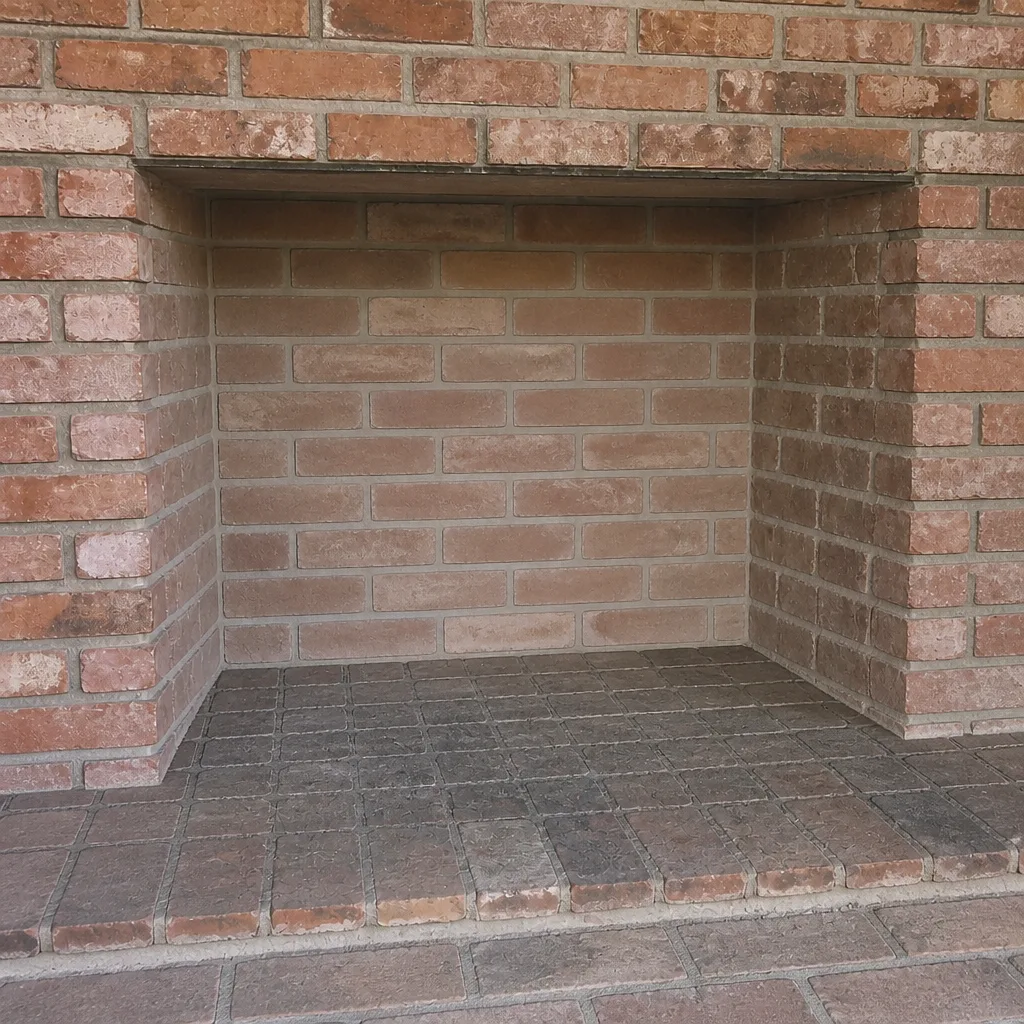
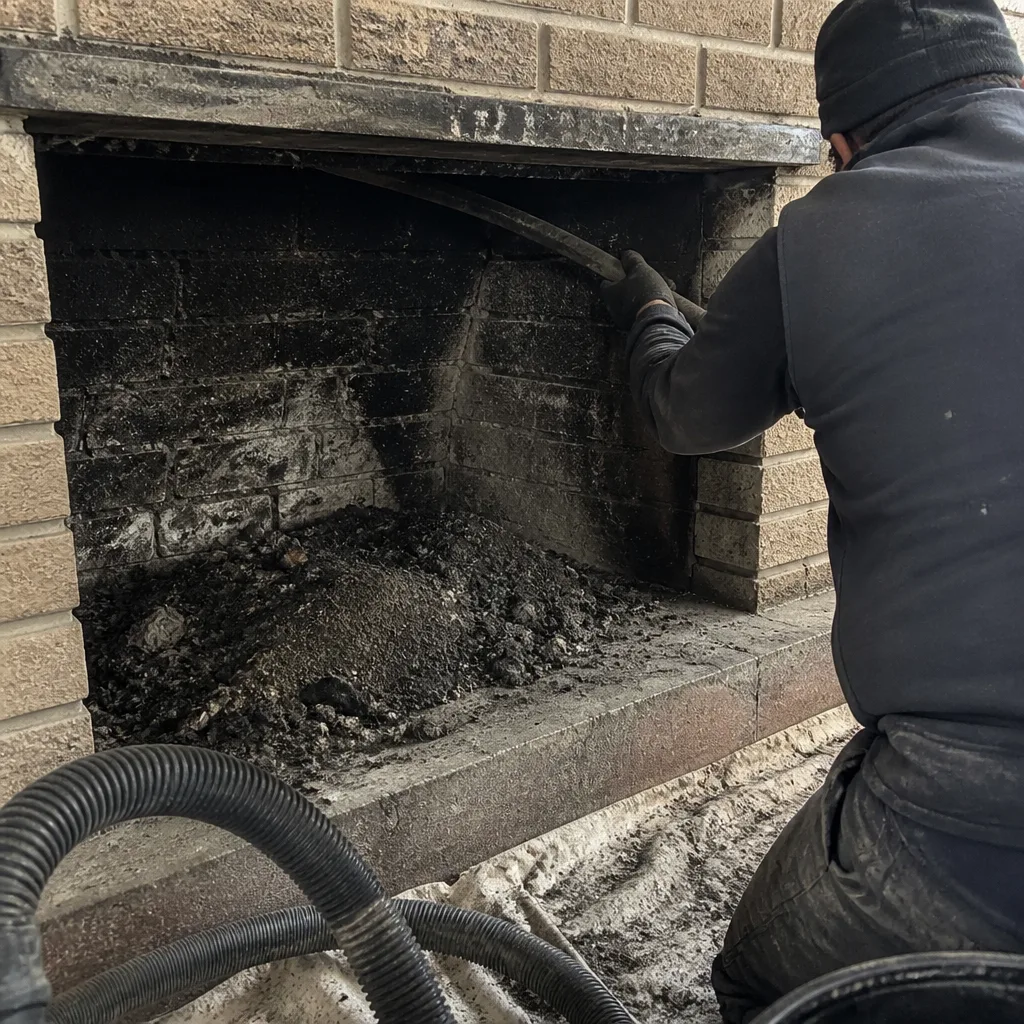
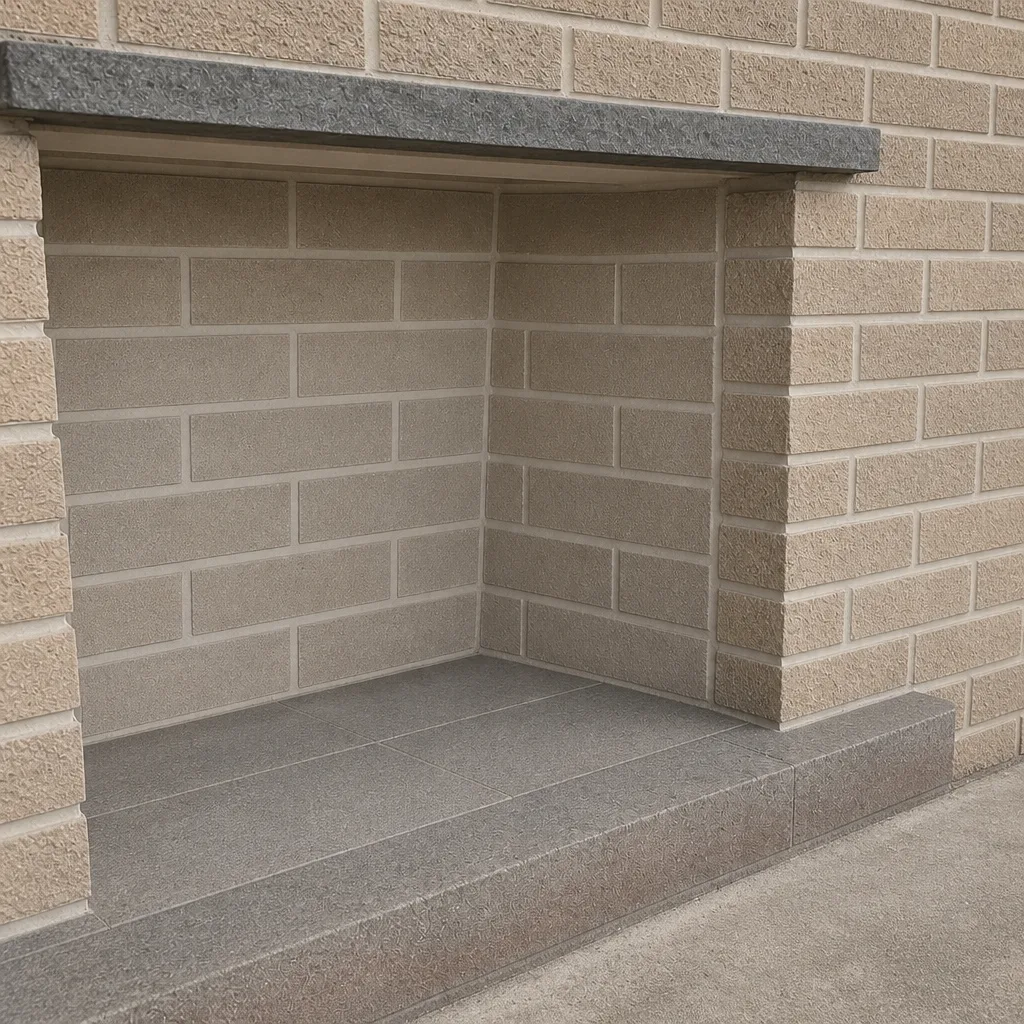
See the difference
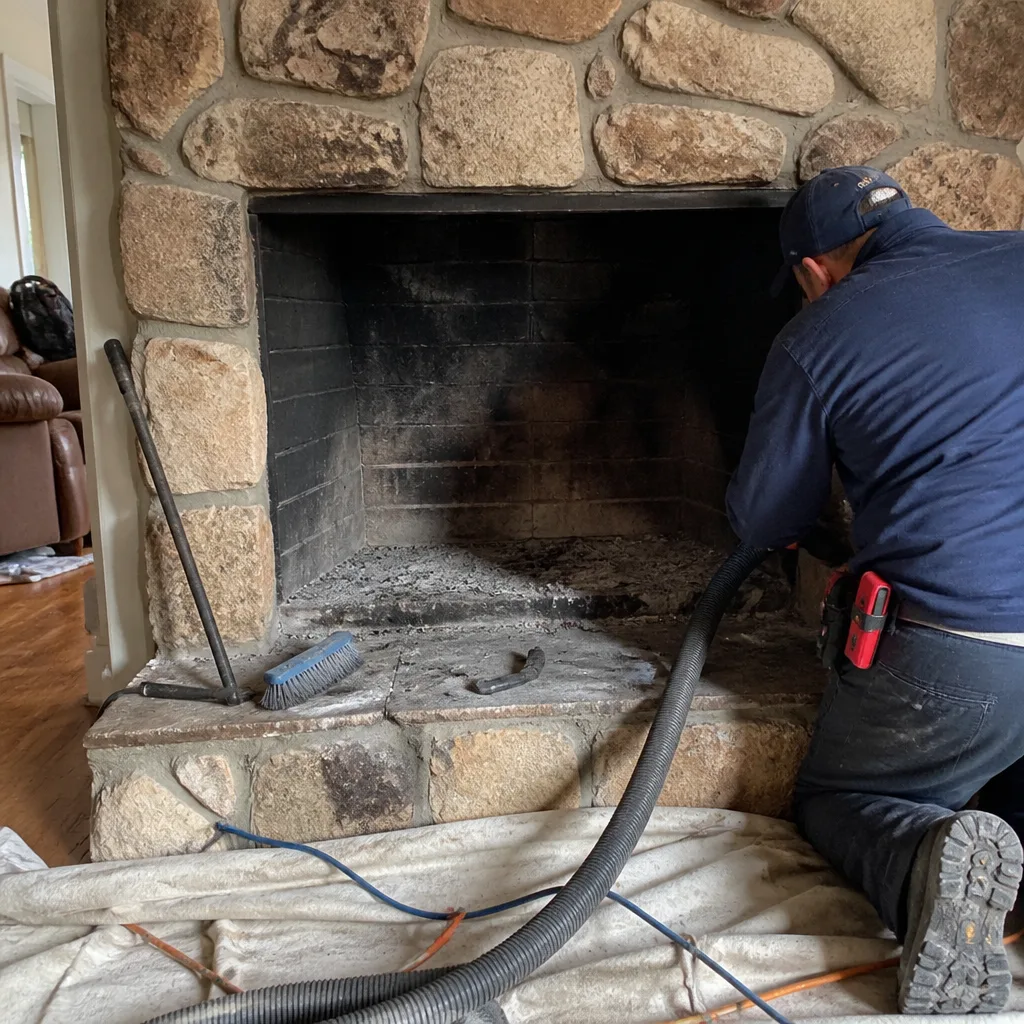 Before
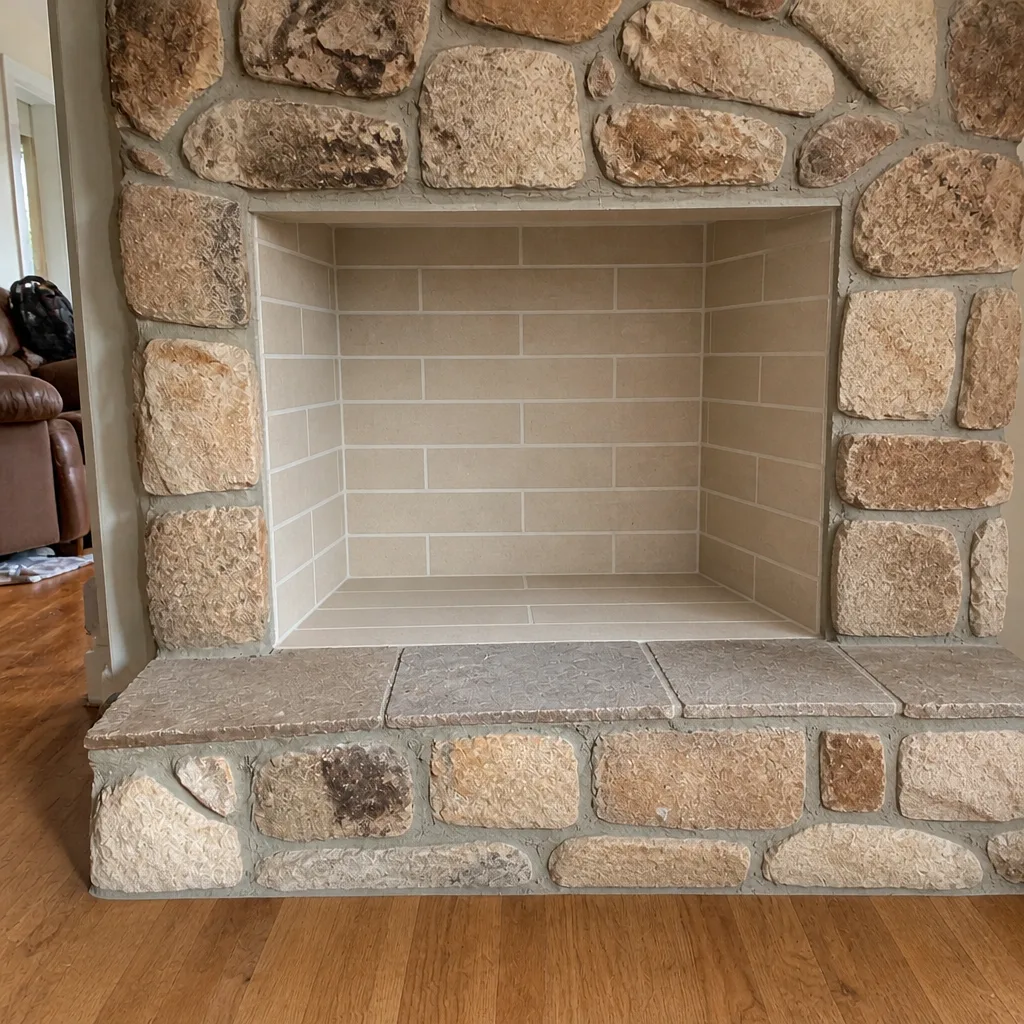 After
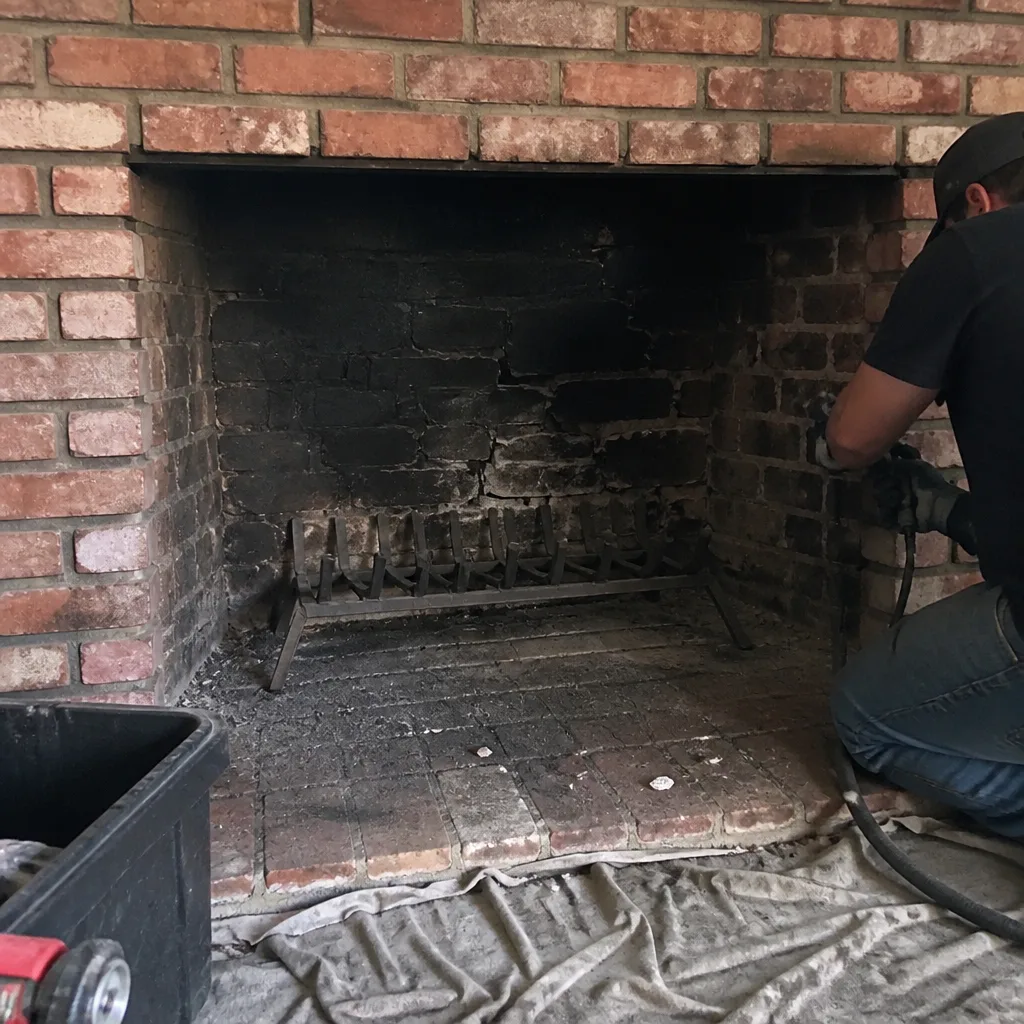 Before
 After
 Before
 After
When to Call a Professional
Call a professional chimney contractor in Floral Park when any of these apply: you’ve just bought a home and don’t know the chimney’s history, a home inspector flagged repairs, you’ve never had the chimney inspected, you see water stains or crumbling masonry on the chimney exterior, the cap is missing or damaged, smoke backs into the room when you light a fire, or it’s been more than a year since the last sweep. Don’t try to inspect or repair the flue yourself; the firebox, smoke chamber, and liner are not do-it-yourself territory, and the risk of missing something important is high. Chimney Sweep Floral Park offers free estimates in Floral Park. Call (877) 792-7251. We answer 24/7. Fast dispatch from 7am to 7pm, Sunday through Friday.
Frequently Asked Questions
Chimney pricing is set per job by a written estimate, so the honest answer is that it depends on what your chimney needs. A straightforward sweep costs less than a sweep combined with a full inspection. The estimate is free and written, and it should itemize what’s included before you commit. Ask what the inspection covers, since that’s what separates a cheap visit from a proper one. Call (877) 792-7251 for an exact quote. Estimates are free.
Not necessarily, and no one should tell you that you do without showing you the evidence. A damaged liner can sometimes be restored with HeatShield ceramic resurfacing instead of replaced. When the liner is too far gone for resurfacing, a DuraFlex flexible liner system is the professional-grade relining option. The decision should rest on what the inspection finds and what the photos show, not on a sales pitch. Ask to see the evidence before you agree to anything. Call (877) 792-7251 for an exact quote. Estimates are free.
For most homes, once a year is the standard, and the right timing is before burning season rather than during it. If the fireplace is used heavily, a mid-season check makes sense. Floral Park’s mild winters mean the fireplace often gets used across more months than in colder climates, so annual inspection matters. Ask about inspection, not just sweeping, since the flue being clean doesn’t tell you about the crown or cap. Call (877) 792-7251 for an exact quote. Estimates are free.
Creosote builds up in the flue, and that raises the risk of a chimney fire. A blocked or compromised flue can also let carbon monoxide back up into the home. Beyond the flue, a missing cap or cracked crown lets water into the masonry, and that damage gets more expensive the longer it sits. None of this is meant to scare you; it’s the reason an annual inspection is worth having. Call (877) 792-7251 for an exact quote. Estimates are free.
Yes, and you should. The CSIA maintains a public directory of certified sweeps, so ask for the name of the certified technician who will be at your home and search that name. Certification requires renewal, so check that it’s current rather than expired. A company that can’t or won’t give you a name to verify is a company to skip. Call (877) 792-7251 for an exact quote. Estimates are free.
Book a full inspection before your first fire, not just a sweep. A home inspection usually doesn’t cover the inside of the flue or the condition of the crown and cap in detail, so an older chimney needs a dedicated look. Expect to learn something: prior repairs, deferred maintenance, or a cap that needs replacing. Ask for the findings in writing with photos before any repair is quoted. Call (877) 792-7251 for an exact quote. Estimates are free.
The Bottom Line
Hiring a chimney contractor in Floral Park comes down to four things: verify the certification instead of trusting the logo, read the quote for scope rather than price, expect findings in writing with photos, and confirm the contractor handles the whole system rather than just the flue. The credential gap is wide because California doesn’t license chimney work, so the vetting is on you. Choose a specialist who carries the materials the repair needs, whether that’s HeatShield resurfacing or a DuraFlex liner, and who can tell you when work can safely wait. Chimney Sweep Floral Park works across sweeping, inspection, repair, cap and crown, and fireplace repair as one job. Call (877) 792-7251 for a free estimate. We answer 24/7. Fast dispatch from 7am to 7pm, Sunday through Friday.
Written by the team at Chimney Sweep Floral Park.