
Top Signs You Need Chimney Cleaning Service – Don’t Ignore These
Most homeowners wait for smoke to back up into the room before they think about their chimney. That’s the wrong trigger. The signs that actually matter usually show up between fires: a chalky white stain on the brick in spring, a faint tar smell in a closed-up house in August, a scratching sound in the flue on a quiet night. Here are the warning signs we look for in Floral Park, why each one matters, and how to tell whether it’s time to book a chimney sweep.
If you spot two or more of these, don’t wait for the next fire to find out. Call (877) 792-7251. We answer 24/7. Fast dispatch from 7am to 7pm, Sunday through Friday.
What Are the Earliest Warning Signs Your Chimney Needs Cleaning?
The earliest signs don’t happen when you’re burning wood. They happen in the months between seasons, when the chimney is mostly out of sight and out of mind. That’s when moisture, animals, and creosote do their quiet work. If you check your firebox and exterior once a season, you’ll catch most problems before they cost real money.
Signs that reliably show up before serious chimney failure:
- White mineral staining on exterior brick (see the section below; this one is the most overlooked)
- A persistent ashy, smoky smell in the firebox even when the chimney is cold
- Black soot streaks climbing above the damper rather than staying inside the firebox
- Scratching or fluttering sounds coming from the flue
- A visible drop in draft that shows up only on certain windy days
- Loose mortar or crumbling brick joints you can brush off by hand
Any single one of these deserves a closer look. Two or more together usually means creosote has had time to accumulate and something has likely gotten into the system.
White Stains on the Brick: Why Efflorescence Is the Sign Most People Miss
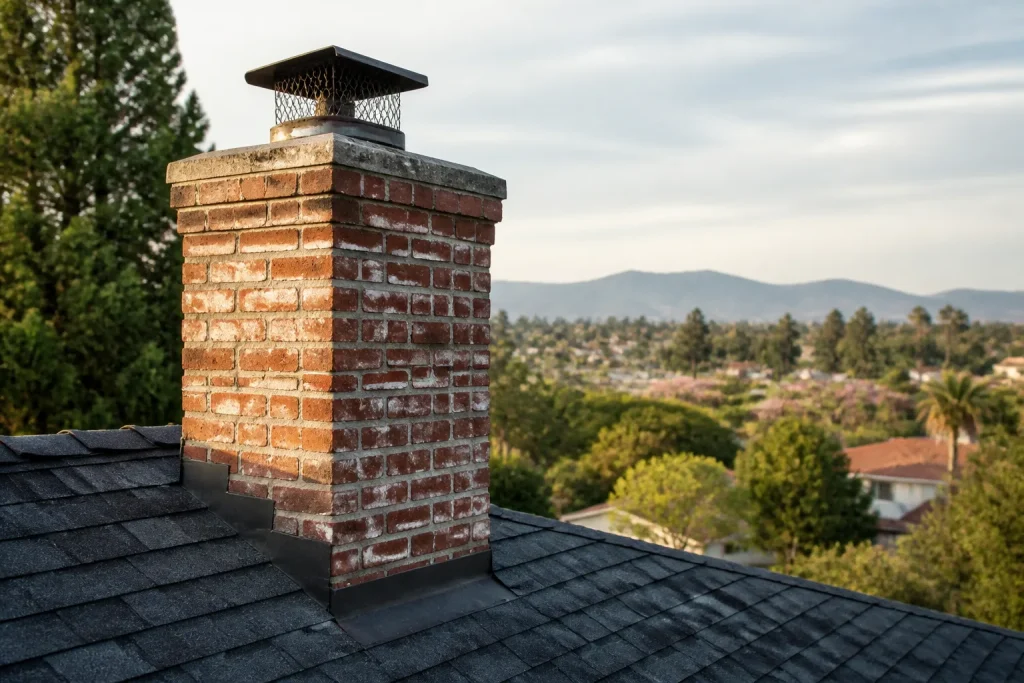
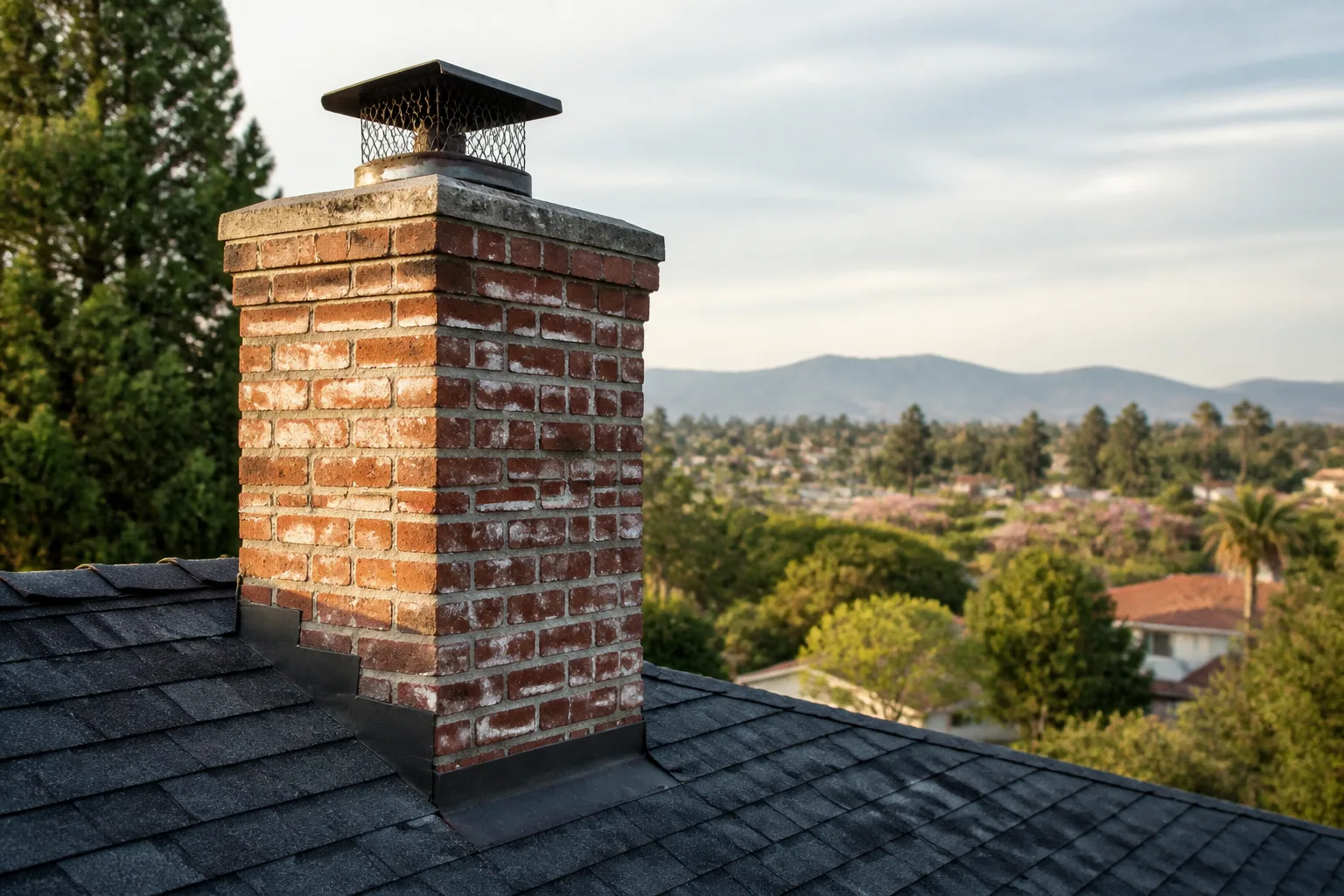
A white, chalky, or powdery stain on the outside of your chimney is called efflorescence, and it’s the earliest visible sign that water has been moving through your chimney structure. The staining shows up in spring, because that’s when the moisture finally has a chance to work its way out. It almost always means water has been getting in through a failed crown, a missing or damaged cap, or cracked mortar joints all winter.
Efflorescence isn’t cosmetic. It’s the leading indicator that masonry is losing its hold from the inside out. By the time you see brick spalling or a loose crown, the water has usually been at work for a full season or more. Our chimney cap & crown installation work in Floral Park addresses the exact two components most moisture intrusion starts with.
What to check on a spring walk-around:
- White or gray staining on the upper quarter of the chimney
- Cracks in the crown (the sloped concrete top)
- A missing, rusted, or loose cap
- Brick faces that feel soft or crumble when pushed
- Daylight visible between joints
If you can see any of those, book a chimney inspection. A proper inspection checks the crown, cap, and liner together, not just the firebox.
Why Does My Fireplace Smoke Only on Windy Days?
If smoke backs into the room only when the wind picks up, the chimney isn’t broken. It’s telling you something is restricting the flue or the flue is too small for the fireplace opening. Wind-driven backdraft is the most common complaint we hear from Floral Park homeowners, and it usually has one of four causes: creosote buildup narrowing the flue, a partial blockage (leaves, nest, or a collapsed flue tile), a flue that was never correctly sized for the firebox, or a chimney cap that isn’t helping with downwash.
That last point matters more than people realize. A well-designed cap does more than keep rain out; it helps stabilize draft when wind pushes sideways over the top. Cheap or missing caps leave the flue open to the weather and to downdrafts. We carry Olympia Chimney and Copperfield caps because the shape actually does the job the chimney needs.
What to notice next time it happens:
- Does smoke roll out immediately when you light the fire, or only after a few minutes?
- Does it happen from a specific wind direction, or any breeze?
- Does opening a nearby window help? (If yes, that’s usually a house-tightness or flue-sizing issue.)
None of those answers mean DIY repair. They mean a proper inspection and a chimney sweep to rule out blockage before anything else.
Animals in the Chimney: The Signs You’d Recognize Without Seeing the Animal
Most animal activity inside a chimney is invisible from the outside. You don’t have to see a bird or a squirrel to know something’s in there. The clues show up in sound, debris, and smell, and usually all three if the animal has been settled for more than a few days.
Tell-tale signs:
- Scratching is usually squirrels, raccoons, or mice in the flue itself; it’s quick, repetitive, and often louder at dusk.
- Fluttering or a dry scrabbling sound is usually birds caught on a smoke shelf or lodged against a flue tile.
- Sticks, grass, or shredded insulation appearing on the smoke shelf or in the firebox is a nest; this is the most dangerous sign because nests ignite.
- A sharp ammonia or wet-fur smell near the fireplace usually means an animal has been there long enough to leave droppings.
Never light a fire if you suspect a nest. The materials birds and squirrels use are highly flammable. And never try to remove an animal yourself; a chimney sweep with the right equipment clears the blockage safely, and a Floral Park chimney inspection confirms whether the flue was damaged.
What Does Creosote Smell Like, and Why Does the Smell Change in Summer?
Creosote has two distinct odor profiles, and the difference tells you how much buildup you’re dealing with. During winter, when the fireplace is in use, the smell is sharp and smoky; that’s normal. During summer, when the house is closed up and warm, creosote off-gasses differently: you may notice a tar-like, asphalt, or old-barbecue smell drifting from the fireplace even when nothing has been burned in months. That’s the signal that buildup has reached Stage 2 or Stage 3.
Stage 1 creosote is flaky and brushes off easily. Stage 2 is a hard, crusty deposit that requires real mechanical removal. Stage 3 is a glazed, tar-like layer that has essentially fused to the flue; it’s the stage most associated with chimney fires, and it will not come off with a standard brush alone.
Why this matters between seasons: you can’t see inside the flue without a camera, so odor is often the only clue. A whiff of tar in a closed-up house in July means creosote has had all spring to harden. Book a chimney sweep before fall, not after.
After a Storm: When to Inspect the Chimney Exterior in Floral Park
Any significant rain event, hail, or high wind is a trigger to look at your chimney before the next fire. Wind loosens caps, hail chips crowns and brick faces, and heavy rain finds every crack in the mortar. The damage is often invisible from the ground; that’s why a visual exterior check from a safe vantage point (or a pair of binoculars from the yard) is genuinely useful.
What to look for after a storm:
- A cap that’s tilted, missing, or has visible rust
- Fresh cracks or chunks missing from the crown
- New efflorescence that wasn’t there before
- Dislodged brick or mortar on the roof or ground near the chimney
- Any visible change in the shape or outline of the chimney stack
If you spot any of those, don’t light a fire until someone has looked at the interior. Water and a compromised crown lead to liner damage, and liner damage means a repair instead of a cleaning. Our chimney cap & crown work is the front-line defense against this cycle, and we use HeatShield ceramic resurfacing when a liner can be restored instead of replaced.
When to Call a Pro (and When It Can Safely Wait)
Call a professional when you see efflorescence on the exterior, smell creosote in a closed-up house, hear scratching, notice smoke backing up on windy days, or see damage to the crown or cap after a storm. Don’t light another fire until it’s checked.
Some things can wait. A dusty firebox, a little soot on the glass door, or a fireplace that hasn’t been used in a year is usually fine to schedule on your own timeline. The difference between the two categories is evidence: a camera inspection shows exactly what’s in the flue. Nothing gets recommended unless you can see it on the report. We use DuraFlex flexible liner systems and HeatShield ceramic resurfacing because the repair has to hold, and a sweep is a starting point, not an endpoint.
Related Services in Floral Park
Sweeping, chimney inspection, chimney repair, fireplace repair, and cap and crown work all live under one roof, which means no coordinating separate crews. Visit Chimney Sweep Floral Park for the full picture.
The Bottom Line
The chimney signs that matter most usually show up between seasons: white efflorescence on spring brick, a tar smell in a closed-up summer house, scratching in the flue, smoke that only backs up on windy days, and fresh exterior damage after a storm. Any two of those together warrant a look before the next fire.
Our technicians have up to 10 years of experience, and inspections evaluate the entire system – firebox, flue, cap, crown, and exterior masonry – not just the part you can see. Repairs use professional-grade materials from brands including Olympia Chimney, Copperfield, DuraFlex, and Famco, so the work is built to last the next season and the next decade.
If you’re in Floral Park and need help, Chimney Sweep Floral Park offers free estimates. Call (877) 792-7251. We answer 24/7, with fast dispatch from 7am to 7pm, Sunday through Friday.
Frequently Asked Questions
Most chimneys should be swept once a year if they see regular use, and again if you notice any of the signs above regardless of timing. Wood-burning fireplaces that get heavy winter use often need a mid-season check as well. The annual sweep isn’t just about buildup; it’s a chance to confirm the cap, crown, and liner are holding up. Call (877) 792-7251 for an exact quote; estimates are free.
Creosote hardens over time, moving from flaky (Stage 1) to crusty (Stage 2) to glazed and tar-like (Stage 3). Stage 3 buildup is the stage most associated with chimney fires, and it can’t be removed with a standard brush. Skipping cleaning also lets small crown and cap damage go unnoticed until water has reached the liner. A cleaning catches both problems in one visit. Call (877) 792-7251 to schedule; estimates are free.
The honest answer is: the surface sweep is something a careful homeowner can do with the right brush, but the parts that matter most (camera inspection, creosote staging, cap and crown condition, liner integrity) need a professional. You also can’t verify liner safety from the firebox. If you’re already seeing any of the signs above, it’s worth having someone look with a camera. Call (877) 792-7251; estimates are free.
Yes, especially if the smell is tar-like or smoky in a closed-up house. That’s creosote off-gassing, and it usually means buildup at Stage 2 or beyond. A lingering ashy smell can also mean animals or moisture. Either way, summer is the right time to look, before fall lighting begins. Call (877) 792-7251 for an exact quote; estimates are free.
Written by the team at Chimney Sweep Floral Park.
Need Chimney Cleaning Help?
Call Chimney Sweep Floral Park - the local pro we connect you with is licensed and insured, with free written estimates in Floral Park.
(877) 792-7251