
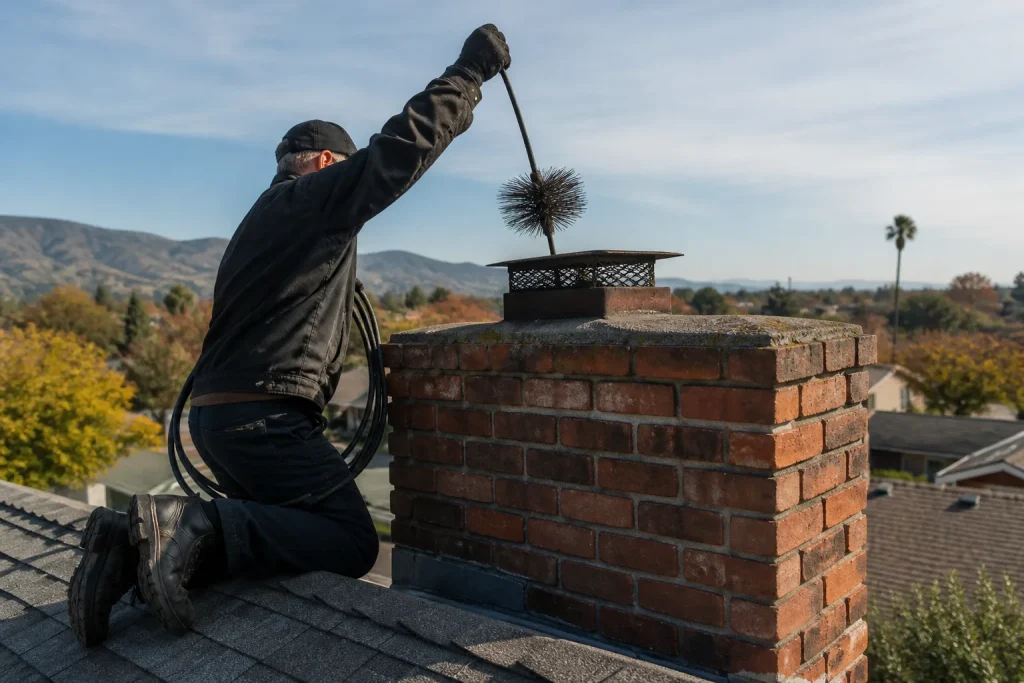
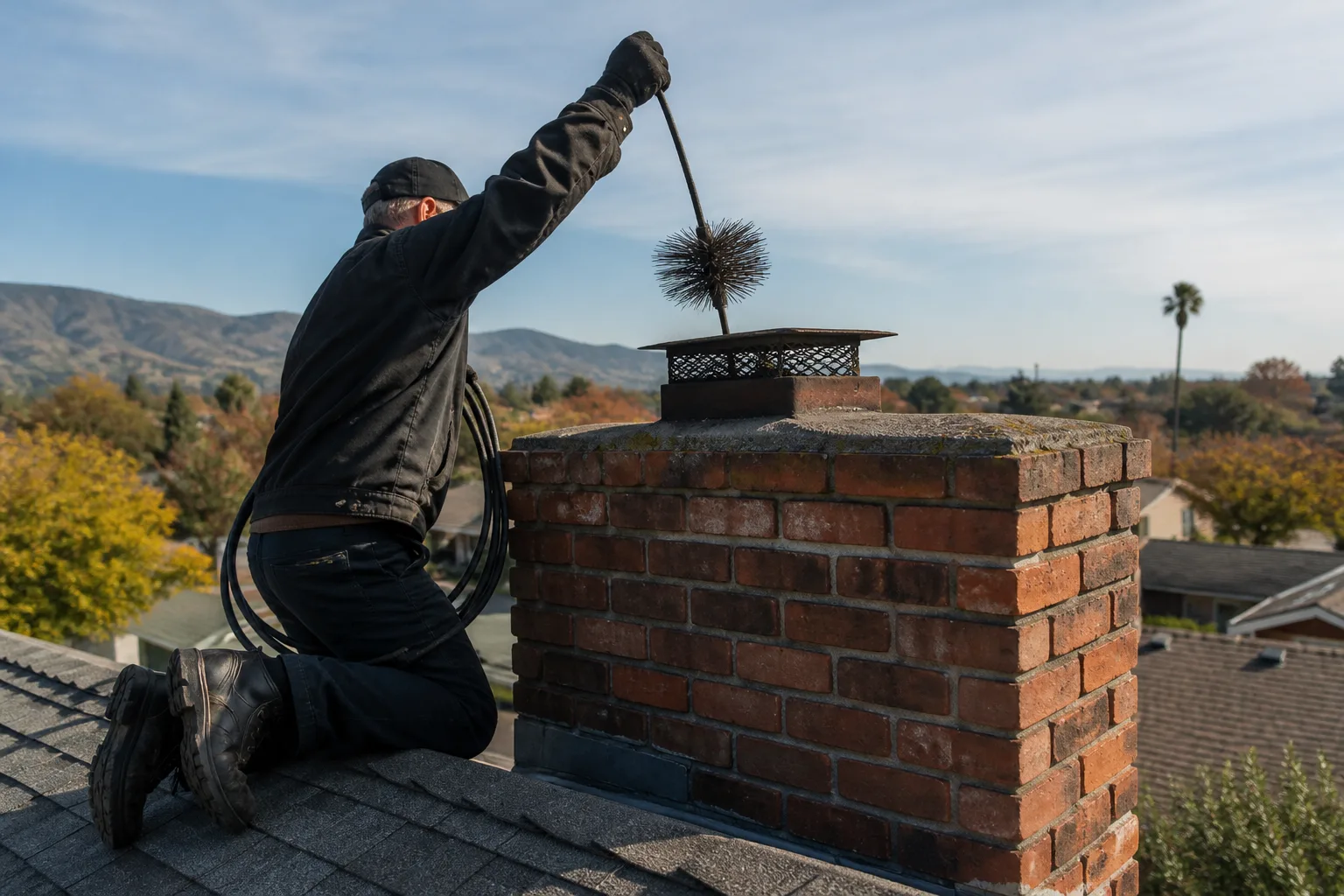
Chimney Sweep: Repair or Replace? How Floral Park Homeowners Decide
Most homeowners ask us whether they need to repair or replace their chimney only after someone has already told them the answer. That’s backwards. The repair-or-replace call isn’t about how old the chimney looks. It comes down to which component failed, why it failed, and whether a repair fixes the cause or just the symptom. Here’s the framework we use to tell the difference. If you’d rather have a specialist walk you through it on your own chimney, call (877) 792-7251.
Why Repair vs. Replace Is Rarely About Age
A chimney isn’t one thing. It’s a stack of parts that fail at completely different rates, and lumping them together is where most bad decisions start. A crown can crack in a handful of seasons while the flue behind it is still sound. A liner can spall apart while the brick around it holds fine. When you treat the whole chimney as a single unit, you either replace systems that had years left or patch components that already gave out.
We break every chimney down into five parts and judge each one on its own:
- Crown – the concrete cap at the top. Hairline cracks are a repair. A crown pulling away from the flue or crumbling into pieces is a rebuild.
- Cap – the spark screen and cover. Missing or damaged caps are among the most common sources of water getting in. A new cap is inexpensive and prevents a lot of damage downstream.
- Flashing – the metal sealing the chimney where it meets the roof. Lifting or rusted flashing is fixable. Flashing that has let water in for years can rot the framing around it.
- Liner – the flue lining. Minor cracking can sometimes be resurfaced. A liner with chunks missing or separated sections needs a new one.
- Firebox – the fire chamber. Cracked firebrick can be repointed or rebuilt; a firebox with structural cracks running through it is a bigger job.
In our experience around Floral Park, the crown and cap cause far more damage than people expect, and they’re also the cheapest to address before they cascade into liner problems. That’s why we handle chimney cap & crown work as its own discipline rather than an afterthought.
How to Read a Level II Camera Inspection Report
A Level II inspection with a camera is the foundation of any repair-or-replace call. It’s the difference between guessing and knowing. But the report only helps if you understand the words in it. Here’s what the common terms actually mean:
- Spalling – the surface of the liner or brick is flaking and breaking off. Some spalling can be resurfaced; deep spalling means the material has lost its structural integrity.
- Separation – a gap has opened between liner sections or between the liner and the flue wall. Water or heat can travel through that gap, which is a real safety concern, not cosmetic.
- Offset joints – the flue shifts or steps at a joint rather than running straight. That collects creosote and makes sweeping less effective. Whether it’s a repair or a reline depends on how bad the offset is.
Ask to see the camera footage yourself. A good technician will walk you through the images, not just hand you a one-line verdict. When a liner has genuinely failed, we install DuraFlex flexible liner systems because they’re built for the kind of professional installation that actually holds. We’d rather show you why a liner needs replacing than tell you it does.
The Moisture Question Most Technicians Never Ask
Here’s the thing that changes a repair estimate more than anything else: how long has water been getting in? Damage that looks minor on a camera can be extensive if the leak has been active for several seasons. A small crack in the crown lets water in slowly, and that water works its way down through the brick and mortar year after year.
A technician can estimate how long water has been present by reading the evidence. Interior staining that’s dark and widespread suggests a long-running leak. Efflorescence, the white powdery deposits on brick, points to moisture moving through the masonry. Soft or crumbling mortar near the top tells you the water’s been entering high and working down. When the exposure window is short, a repair often solves the whole problem. When it’s been going on for years, the repair has to address the damage the water already did, not just the crack it came through.
Our technicians have up to 10 years of experience reading exactly this kind of evidence, which is why the moisture timeline is one of the first questions we ask before quoting any repair in Floral Park.
When a Repair Creates False Security
Some repairs look successful and fail again within two to three years. That’s not bad luck. It’s patching a symptom while the cause keeps working. The cases we see most:
- Resurfacing a liner without fixing the water source. If the crown or flashing still leaks, the new surface gets wet and breaks down the same way. The resurfacing was never the problem to solve.
- Repointing mortar joints without addressing structural movement. If the chimney is settling or leaning, fresh mortar will crack again as the movement continues. You need to know why the joints opened before you fill them.
- Replacing a cap but leaving a failed crown. The cap sheds some water, but a crumbling crown still lets it in around the flue. Half a fix buys you another few seasons of the same damage.
This is where HeatShield ceramic resurfacing earns its place. It restores a liner’s integrity without a full replacement, but only when the underlying water and structural issues are handled first. We carry HeatShield because the repair has to hold, and a resurfacing on a chronically wet flue won’t.
Calculating Repair vs. Replacement Cost
The financial side comes down to one comparison: the cost of the repair against the remaining serviceable life of the chimney system. A liner that has ten good years left and needs a $600 repair is an easy call. A liner near the end of its life that needs the same repair is money you’ll spend again soon, and at that point the replacement usually wins.
Framing matters here. If a crown rebuild costs a fraction of what a full liner replacement runs, and rebuilding the crown prevents the water damage that would force the replacement, the math is straightforward. The mistake is spending on the expensive fix when the cheaper one, done in the right order, would have protected the system for years.
Floral Park’s climate plays into this. Our winters are mild, which is easier on masonry than a hard freeze would be, but our warm season brings plenty of heat and dry spells that stress a chimney in other ways. Home age matters too. Older homes often have original liners that have served their time, while newer builds tend to fail first at the crown or flashing where the workmanship or materials were thin. Neither factor alone tells you repair or replace. Together with the inspection, they shape a realistic lifespan estimate. For the firebox side of the equation, our fireplace repair work covers the interior components separately from the flue.
When to Call a Pro
A cracked crown or a damaged cap is not a homeowner project. Anything at the top of the chimney means height work, and anything inside the flue means heat, creosote, and carbon monoxide, which is a job for a trained professional. Please don’t climb up there or reach into the flue to inspect it yourself. If you’re not sure whether what you’re seeing is a repair or a replacement, that’s exactly the question a proper inspection answers. A routine chimney sweep is a good starting point, since a sweep includes a look at the system and flags anything that needs a closer inspection.
Related services in Floral Park: chimney sweeping, chimney inspection, fireplace repair, chimney cap and crown installation, and chimney repair. If you’re in Floral Park and want the full picture, start with Chimney Sweep Floral Park to see how we approach each one.
The Bottom Line
Repair or replace is a component-by-component decision, not a whole-chimney verdict. Judge the crown, cap, flashing, liner, and firebox separately. Get a camera inspection you can see for yourself. Ask how long water has been getting in, because that timeline changes everything. And never accept a patch that ignores the cause, since it’ll be back in two to three years.
Our quick summary:
- Age alone tells you almost nothing.
- The moisture history often matters more than the visible damage.
- Fix water intrusion first, then repair what it damaged.
- A repair that doesn’t address root cause is money set aside for a repeat.
If you’re in Floral Park and need help telling the difference on your own chimney, Chimney Sweep Floral Park offers free estimates. Call (877) 792-7251. We answer 24/7, and fast dispatch from 7am to 7pm, Sunday through Friday. Every estimate is written, free, and priced per job.
Frequently Asked Questions
No. Age alone is not a reason to replace a chimney. What matters is the condition of each component and whether the damage is surface-level or structural. A chimney that has served for decades can still have a sound liner and need only crown or cap work. The inspection tells you which parts are worn and which aren’t. Call (877) 792-7251 for a free estimate.
It depends on how much of the liner has lost structural integrity. A liner with minor cracking and no separation can often be resurfaced with HeatShield ceramic liner resurfacing. A liner with chunks missing, separated sections, or offset joints that collect creosote usually needs a full reline with a flexible system like DuraFlex. A camera inspection is what settles it. Call (877) 792-7251 for an exact recommendation.
We don’t recommend it. A crack in the crown is a sign of how the crown is holding up, and a surface patch won’t stop water from getting in at the edges. Worse, working at the top of a chimney means height work and fall risk. A proper crown repair or rebuild is a job for a trained professional. Call (877) 792-7251 for a free estimate.
In most cases, the repair addressed the damage but not the cause. If water was still entering through a bad crown or flashing, a resurfaced liner or repointed joint will break down again. If the chimney was still moving, new mortar will crack again. A repair only holds when the underlying water source or structural issue is fixed first. Call (877) 792-7251 and we’ll look at the whole system, not just the part that failed.
Written by the team at Chimney Sweep Floral Park.
Need Chimney Cleaning Help?
Call Chimney Sweep Floral Park - the local pro we connect you with is licensed and insured, with free written estimates in Floral Park.
(877) 792-7251