
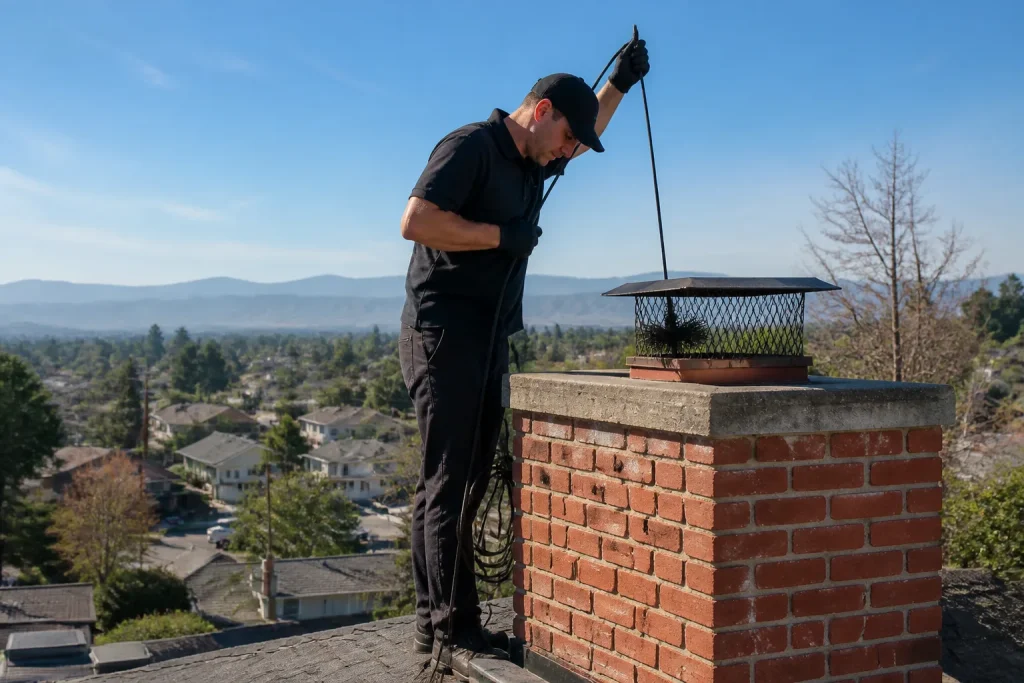
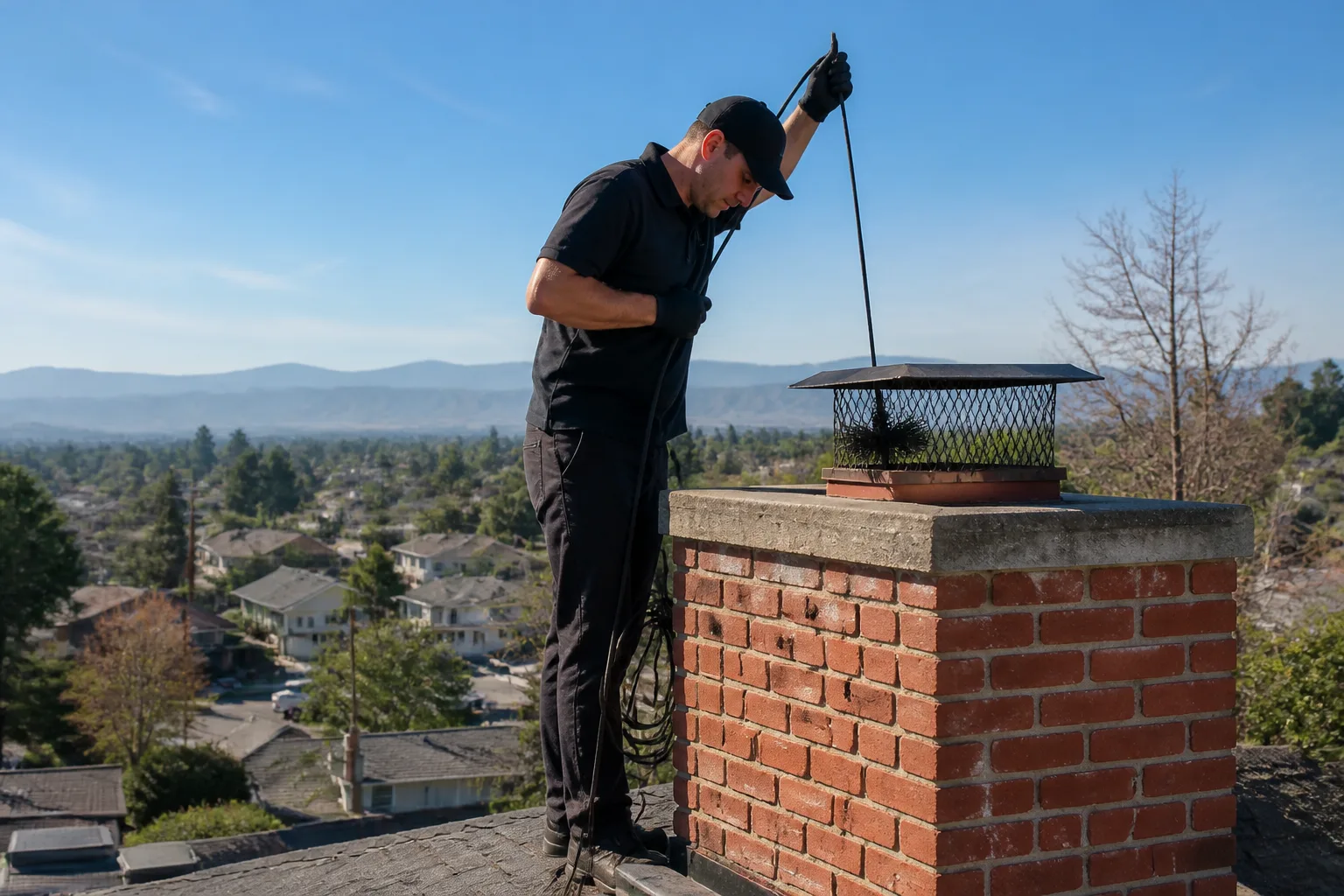
How to Choose the Right Chimney Cleaning Company in Floral Park
California doesn’t require a state license to sweep a chimney. That’s the fact worth sitting with for a second. It means the most qualified technician in Floral Park and the guy who bought a brush kit online last month can both list “licensed and insured” on the same review site, and nothing in the listing tells you which is which. The gap between a real chimney specialist and a generalist with a van is almost entirely invisible to homeowners unless you know what to look for. This guide is about closing that gap.
Why “Licensed and Insured” Tells You Almost Nothing
The phrase shows up on nearly every chimney company page, and it’s essentially meaningless as a quality signal for this trade. A general contractor’s license covers general contracting. It doesn’t certify that anyone on the crew knows how a flue drafts, what a cracked crown looks like from the roof, or when a liner is actually failing versus merely dirty. Insurance covers accidents; it doesn’t cover competence.
What does signal competence is CSIA certification, from the Chimney Safety Institute of America. It’s a voluntary credential, which is exactly why it matters. Earning it requires passing a proctored exam on chimney and venting systems, documenting field experience, and staying current through continuing education. It’s also revocable for code violations, so a certified sweep has something real to lose by cutting corners.
When you talk to a company in Floral Park, ask directly: are your technicians CSIA certified, and can you tell me which ones will be at my house? The answer separates the field fast. “We’re fully trained” and “our guys are experienced” tell you nothing specific. Certification is a yes-or-no question, and a company that has it won’t be shy about saying so.
Two more credentials worth asking about: membership in the National Chimney Sweep Guild, and whether the company carries general liability insurance specific to chimney work. Roof access, height, and fire risk make this a trade where the wrong coverage becomes your problem.
Sweep-Only or Full-System: Why It Matters More Than You Think
A company that only sweeps will clean your flue and hand you a receipt. A company that inspects, diagnoses, and repairs will clean your flue, look at the whole system, and tell you what they found. The first model is cheaper on the first visit. It’s often more expensive by the second.
Here’s the pattern we see in Floral Park homes, many of them older builds with chimneys that have never had a proper look inside: a sweep-only operator cleans the flue, misses a cracked crown or a deteriorating liner, and months later the homeowner calls someone else because there’s water staining on the ceiling or smoke backing into the room. Now the job is a repair, sometimes a structural one, instead of maintenance.
Your chimney system isn’t just your flue. It’s the firebox, the damper, the smoke chamber, the liner, the crown, the cap, and the masonry around all of it. A single-company operation that handles sweeping, inspection, chimney cap & crown installation, fireplace repair, and structural chimney repair gives you one accountable party for the whole thing. No handoff between a sweeper and a separate repair crew, no finger-pointing when something goes wrong.
Ask any company you’re considering: what do you do if you find damage during a sweep? If the answer is “we refer you to someone,” you’re about to start the process over with a stranger who has no stake in the original assessment.
Red Flags in a Chimney Quote
Most bad chimney experiences start with a quote that looks reasonable. Here’s what to watch for before you book.
- A flat sweep price with no mention of inspection. A cleaning without an assessment of the system is a partial job. Any legitimate company will explain what the inspection involves and what level it is.
- No camera inspection offered. Video scoping the flue is how a technician actually sees liner cracks, gaps at joints, and creosote glazing. If a company doesn’t own a camera or doesn’t offer to use it, they’re guessing.
- A liner replacement recommended on the first visit, with no documented evidence. Liners do fail, and we replace them. But the recommendation has to come with camera footage you can watch yourself, showing exactly where the problem is. “Your liner is shot” with nothing to back it up is a sales tactic, not a diagnosis.
- Pressure to decide on the spot. A real repair isn’t urgent in the way a burst pipe is. If the chimney is safe to use, the decision can wait until you’ve reviewed the report.
- Vague answers about repair materials. Ask what they’ll use to resurface or reline. Professional-grade products have names. Hardware-store patching compound that cracks by the next cold season has a name too, and it isn’t one you’ll hear from a specialist.
None of these flags is automatically disqualifying on its own. Together, they’re a pattern worth walking away from.
How to Read a Level II Inspection Report
The National Fire Protection Association defines three inspection levels, and Level II is the one you want for a first visit, after a chimney fire, after a change in fuel type, or when you’ve bought a home with an existing chimney. A Level II inspection covers every accessible part of the system: firebox, damper, smoke chamber, flue, liner, crown, cap, and the exterior masonry, with video scanning of the flue.
A real report isn’t a one-line “chimney is dirty, recommend sweep.” It should tell you:
- What was inspected and how (visual, camera, both)
- The condition of the liner, with photo or video evidence of any defect
- Creosote level and type, since glazed creosote needs different treatment than soot
- The state of the crown and cap, including whether water is getting in
- Any code issues, with the specific code cited
- What needs repair now, what can wait, and what to monitor
That last item is the mark of an honest inspector. A report that recommends everything be fixed immediately, with no distinction between urgent and routine, is either sloppy or selling. A good one will plainly tell you a crown has a few years left or that a hairline firebox crack should be watched but isn’t a hazard yet. If a company in Floral Park won’t put a Level II inspection on the table for a first visit, they’re not giving you a real assessment of your chimney.
Ask About Materials, Not Just Price
This is where most homeowners stop asking questions, and it’s the question that predicts whether the repair lasts. Chimney repairs fail for one main reason: the wrong material, applied by someone without the training to apply it correctly.
When a liner needs restoration rather than full replacement, HeatShield’s ceramic resurfacing system is the product we reach for. It’s a specialized application that rebuilds liner integrity from the inside without tearing out the existing flue, and it extends the life of a chimney that would otherwise need a full reline. Most sweep-only companies can’t offer it because it requires specific training and equipment. When a full reline is the right call, DuraFlex flexible liner systems are what professional installers use on aging or damaged flues. Both are products you should hear named in a quote, not described vaguely as “a liner.”
Ask any company you interview: what specific product will you use for this repair, and why that one? A specialist answers without hesitation. A generalist will tell you they use “the standard stuff,” which is your cue to keep looking.
When to Call a Pro
A yearly sweep is the baseline. But some situations shouldn’t wait for the calendar. Call a professional if you notice smoke rolling back into the room when the fire is lit, a strong creosote smell that lingers when the fireplace is cold, water staining on the ceiling near the chimney, crumbling mortar or a visibly cracked crown, or a chimney that hasn’t been inspected since you bought the house. Carbon monoxide risk is real and it’s silent, which is a strong argument for an annual inspection and a working CO detector on every level of the home. None of this is a reason to panic. It’s a reason to have someone who knows what they’re looking at take a close look.
Related services in Floral Park: a routine chimney sweep keeps creosote from building up between inspections, and fireplace repair addresses the firebox and damper issues that a sweep can reveal.
The Bottom Line
Vetting a chimney company in Floral Park comes down to four questions: are your technicians CSIA certified, do you offer a Level II inspection with camera documentation, can you handle the repair if you find one, and what specific products do you use? A company that answers all four clearly is a specialist. One that dodges any of them isn’t. Our technicians have up to 10 years of experience, and we work with professional brands like HeatShield and DuraFlex because the repair has to hold, not just look finished on the invoice. If you’re in Floral Park and need help, Chimney Sweep Floral Park offers free estimates. Call (877) 792-7251. We answer 24/7. Fast dispatch from 7am to 7pm, Sunday through Friday.
Frequently Asked Questions
You need a certified one, and yes, it matters. California doesn’t license chimney sweeps, so CSIA certification is the only standard that confirms chimney-specific training, field experience, and continuing education. Any company in Floral Park should be able to tell you plainly whether their technicians hold it. Call (877) 792-7251 for an exact quote on an inspection, estimates are free.
It’s legitimate if the company shows you camera footage of the defect and explains what they found. It’s a sales pitch if they recommend replacement on the first visit with no documentation, no video, and no distinction between what’s urgent and what can wait. Ask to see the footage before you agree to anything. Call (877) 792-7251 if you want a second opinion with a written report.
A Level I is a visual check of accessible parts during a routine sweep. A Level II adds video scanning of the flue and a full assessment of the crown, cap, and exterior. You want a Level II for a first visit, after buying a home, after a chimney fire, or when you’ve changed fuel types. Any company that doesn’t offer one isn’t giving you a real picture of your chimney’s condition. Call (877) 792-7251 to book one.
Once a year for most wood-burning fireplaces, and more often if you burn heavily or notice creosote buildup. Gas fireplaces still need an annual inspection even though they produce far less creosote, because venting problems and liner issues aren’t about soot alone. Book before the burning season starts rather than after. Call (877) 792-7251 for a free estimate.
Written by the team at Chimney Sweep Floral Park.
Need Chimney Cleaning Help?
Call Chimney Sweep Floral Park - the local pro we connect you with is licensed and insured, with free written estimates in Floral Park.
(877) 792-7251