
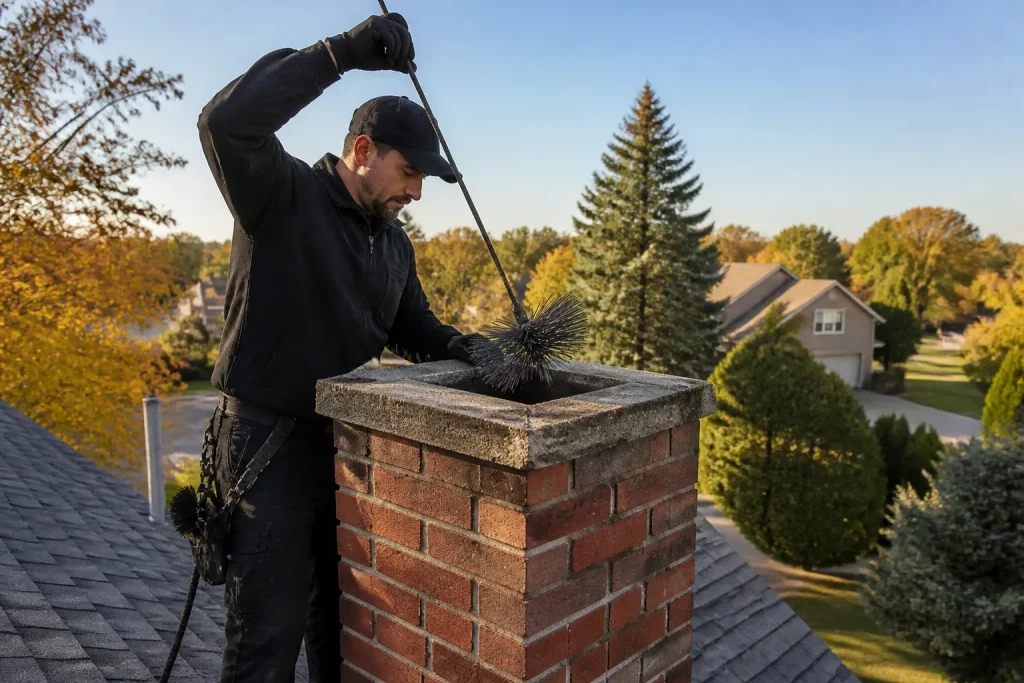
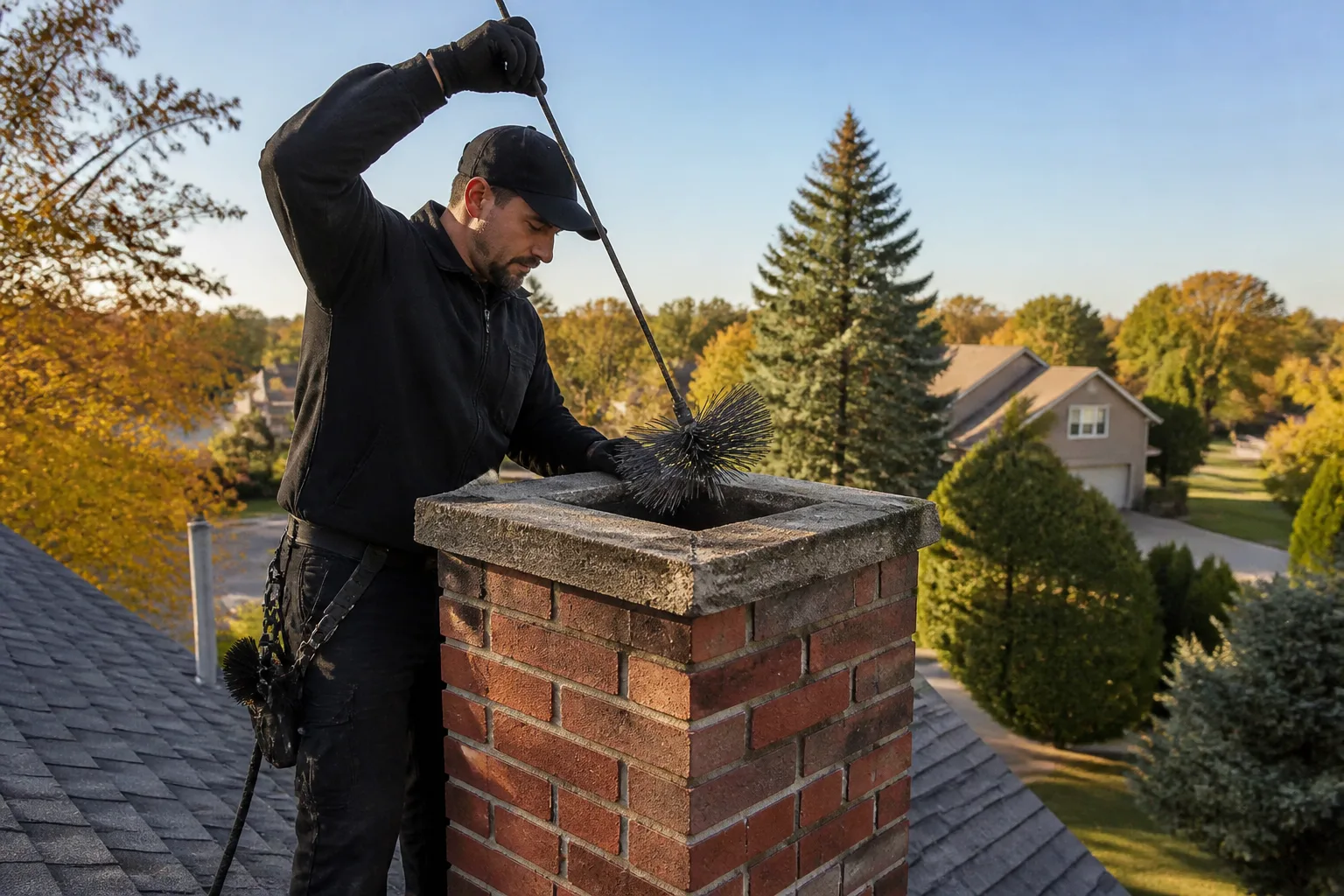
DuraFlex Chimney Sweep in Floral Park: A Homeowner’s Guide
A flexible stainless steel liner is only as good as the connection points at each end. That’s where most failed DuraFlex installs get compromised, and it’s almost never the liner itself. It’s a shortcut at the top plate or a loose appliance connector that lets creosote, moisture, or exhaust find a path it shouldn’t. If you’ve been told your flue needs relining and you’re weighing a DuraFlex system for your Floral Park home, the material spec matters less than you think. The installation is what decides whether the liner serves you for twenty years or five.
If you’d rather not climb onto the roof to sort this out, call (877) 792-7251. We answer 24/7.
What problem is DuraFlex actually designed to solve?
DuraFlex is a flexible stainless steel liner system built to create a continuous, correctly sized flue inside an existing chimney. It solves three specific problems. First, a flue that’s too large for the appliance connected to it – an old open fireplace flue serving a modern insert or a gas appliance that needs a much smaller diameter. Second, deteriorated terra cotta tile liners where the clay has cracked, spalled, or separated at the joints. Third, gas appliance venting upgrades where the existing flue was never rated for the new appliance.
Here’s how those three cases usually look in Floral Park homes:
- Oversized flue-to-appliance mismatch. The chimney was built for a wood-burning fireplace, but the current appliance (an insert, a wood stove, or a gas unit) needs a smaller, tighter flue to draft properly. An oversized flue runs cold, drafts poorly, and builds creosote faster than it should.
- Compromised terra cotta. Tile liners crack with age and heat cycling. Once a joint opens, combustion gases can migrate into the chimney’s masonry cavity instead of going up and out.
- Gas venting upgrades. A new gas appliance often requires a liner rated for the flue temperatures and condensation that appliance produces. The original clay flue wasn’t built for that job.
What DuraFlex does not solve is a structural problem. If the chimney’s masonry is failing, or the crown is cracked and letting water in, a liner alone won’t fix it. Your chimney system, not just your flue, has to be sound before a liner goes in. That’s why we inspect the whole assembly – cap, crown, masonry, and firebox – before anyone talks about relining. A liner is only as good as the chimney it lives inside.
Single-wall vs. double-wall DuraFlex: which one does your appliance need?
Single-wall DuraFlex is one layer of stainless steel. Double-wall adds a second wall with an insulating air gap between them. The choice isn’t a preference; it’s determined by the appliance’s specifications and by what your local code authority requires for that appliance type. When in doubt, the appliance manufacturer’s installation manual is the document that settles it, and your city’s building department has the final word on the permit.
In practical terms:
- Single-wall suits certain wood appliances where the flue gas temperatures stay high and the chimney is well positioned. It’s a thinner profile, which can matter in a tight flue.
- Double-wall is the usual choice for gas appliances, for appliances that produce cooler flue gases, and for any situation where the installation manual calls for an insulated or listed double-wall vent. The second wall keeps flue gases hotter through the run, which protects draft.
This is where cheap relining jobs fall apart. A contractor who stocks only one configuration will sell you the one they have, whether or not your appliance calls for it. We work with DuraFlex because the system offers the configurations a real installation needs, and the spec sheet has to match the appliance, not the other way around. If the manual says double-wall and you get single-wall, the install may vent – until the day it doesn’t. Ask to see the spec that justifies the choice before work starts. That’s a fair question, and a professional will answer it without flinching.
Why the insulation wrap matters more in a mild climate
Floral Park’s winters are mild, which trips up a common assumption: that a mild climate means insulation doesn’t matter. The opposite is often true. When outdoor temperatures are moderate, the temperature difference driving your chimney’s draft is smaller, so the flue has less natural pull to work with. An insulated liner holds heat inside the flue, which keeps the draft steady and the flue gases moving up and out instead of lingering.
There’s a second reason. Combustion produces water vapor, and a flue that runs cool lets that vapor condense on the liner walls. Condensation is the quiet enemy – it combines with creosote and acidic residue to shorten the life of stainless steel, especially at the seams and connection points. Wrapping the liner reduces that condensation by keeping the flue warmer through the whole run. In a mild-winter climate like Floral Park, this is not an upsell. It’s the difference between a liner that lasts and one that corrodes years ahead of schedule.
Insulation also matters for clearance and safety, depending on the appliance and the chimney’s construction. Again, the appliance manual and local code govern. We install the wrap when the spec calls for it and explain why. If a quote skips the wrap without addressing draft and condensation, ask about it. A good installer will have a reason either way.
What should you check after a DuraFlex installation?
Before you sign off on a relining job, walk the installation. A proper DuraFlex job has specific, checkable details at both ends, and the homeowner can verify them without climbing the roof themselves.
- Top plate and cap. The liner should terminate at a properly sealed top plate, with the chimney cap correctly fitted over it. This is where water gets in and where most shortcuts hide.
- Appliance connector. The bottom connection should be secure, correctly sized, and sealed to the appliance. A loose connector is a carbon monoxide path, and it’s the single most common failure point.
- Insulation wrap. Confirm the wrap was actually installed if your spec called for it. You shouldn’t have to take anyone’s word – ask to see it before the liner goes down.
- Inspection record. You should receive documentation of the install, including the appliance spec it was matched to. If the installer can’t tell you which configuration they used and why, that’s a warning sign.
- Draft test. A finished job should be tested for proper draft before it’s declared done.
We do a full system inspection as part of the job and a walkthrough after, so you can see what was installed and where. Camera inspection with photos belongs in the record. When you’re in Floral Park and someone hands you a relining quote, this checklist is how you tell a real install from a quick one.
How does a relined chimney change future cleaning and inspection?
A properly installed DuraFlex liner usually makes future service simpler and safer. A continuous stainless flue has fewer joints than a terra cotta tile liner, so there are fewer places for creosote to collect and fewer spots that can fail. A chimney sweep on a relined flue is a more predictable job, and the technician can work the full run knowing the liner is sound.
Your routine schedule doesn’t disappear, though. A relined chimney still needs annual inspection and sweeping based on how much you burn. What changes is what the technician is looking for. On a tile flue, a big part of the inspection is checking for cracked or shifting tiles. On a relined flue, the focus shifts to the connection points – the top plate, the cap, and the appliance connector – plus the condition of the stainless itself and any signs of condensation. A relined chimney makes inspection faster and the findings clearer, but the annual look is still what catches a problem while it’s small.
Relining also tends to change the surrounding work. A new liner pairs naturally with addressing the chimney cap & crown at the same time, since the cap and crown are the first line of defense against water intrusion. We handle that in the same visit rather than sending you to a separate contractor. One company, one accountable job.
When should you call a pro instead of waiting?
Relining is not a do-it-yourself project, and neither is diagnosing whether you need one. Working on a chimney means height, combustion gases, and connections that can fail silently. Carbon monoxide from a loose connector doesn’t announce itself; that’s the whole danger. If you smell smoke in the house, notice draft problems, or have a cracked or spalling terra cotta liner, call a trained professional. Don’t run the appliance until it’s checked.
If a sweep or inspection turns up a flue that needs relining, you’ll want the whole system looked at – not just the flue. That’s where fireplace repair and structural work enter the picture, and where a specialist who covers the full chimney saves you a chain of separate callouts. We carry DuraFlex and HeatShield because the repair has to hold, and because a liner is only worth installing when the rest of the system is ready to receive it. A sweep is a starting point, not an endpoint.
For the bigger picture on keeping a Floral Park chimney in service, our Chimney Sweep Floral Park specialists can answer questions and set up an inspection. Run the walkthrough checklist above on any DuraFlex quote you get, and don’t sign off until the connection points check out.
The Bottom Line
DuraFlex solves a real problem – an oversized, deteriorated, or incompatible flue – but the liner is only half the story. The connection points at the top plate and the appliance connector decide how long it lasts, and the insulation and configuration have to match your appliance and your local code. Insist on an installation that matches the spec, a walkthrough you can verify, and a record of what went in. Materials are the easy part; installation quality is what earns you twenty years instead of five.
If you’re in Floral Park and need help, Chimney Sweep Floral Park offers free estimates – call (877) 792-7251. We answer 24/7. Fast dispatch from 7am to 7pm, Sunday through Friday.
Frequently Asked Questions
How much does a DuraFlex chimney liner installation cost in Floral Park?
The price depends on the liner length, the configuration (single- or double-wall), whether insulation wrap is required, and the condition of the top plate and cap. Every job is priced per job by a written estimate, and estimates are free. Call (877) 792-7251 for an exact quote.
Do I really need a new liner, or is the contractor upselling me?
You need a liner when your flue is oversized for the appliance, the terra cotta is cracked or spalling, or a new appliance requires venting the original flue can’t handle. The honest test is evidence: camera inspection and photos you can see yourself, matched to the appliance spec. If no one can show you the problem, get a second look. Call (877) 792-7251 – estimates are free.
How often should a relined chimney be swept?
A relined chimney still gets an annual inspection, and sweeping is scheduled based on how much you burn. The difference is that on a relined flue, the technician focuses on the connection points and the stainless rather than on tile joints. Call (877) 792-7251 to book a sweep and inspection.
Can I skip the liner if my flue looks fine from the firebox?
The firebox tells you very little about the flue above it. Cracks and separated joints in the tile liner often aren’t visible from where you stand. A proper inspection runs the full system with a camera before anyone decides the flue is fine. When in doubt, call (877) 792-7251 for a look.
Written by the team at Chimney Sweep Floral Park.
Need Chimney Cleaning Help?
Call Chimney Sweep Floral Park - the local pro we connect you with is licensed and insured, with free written estimates in Floral Park.
(877) 792-7251